“Capacity” and the Complex Realities of Black Disabled Life

Indoors, day. A young, brown-skinned Black wheelchair user with short, dark hair, a beard, and mustache sits at a desk resting their chin on their hands, their elbows on the desk surface. Wearing a light blue collared shirt, they're staring directly at the camera.

With two near-death cardiac episodes within the year, I’ve come to understand capacity in a way I never could have imagined. After months of being bedridden and my hospitalization in January, the conditioning of “being strong” was killing me. It broke my illusion of productivity revealing: hyper-independence will kill me.

As a Black, queer, disabled person, capacity isn’t just about whether I can work; it’s about surviving a world that demands performance while denying care. I define capacity as one’s ability to output physical, mental, and spiritual productivity. Rest is not just sleep; it’s a restorative practice. However in a capitalist society that prioritizes profitability, it becomes more taxing to survive the more marginalized identities you hold. Rest, in a culture that centers whiteness and capitalism, is often treated like a luxury, not a birthright.

Before I had language for disability justice, I survived because of my community. My friend, author Kate Pentecost, extended me kindness and grace which saved my life. I could recover from three physical assaults at a global retailer, PTSD, and depression. She gave me room to begin to process and recognize the trauma I experienced. Shamir, creator of Black On The Vineyard, flew down from New Jersey to Texas to help me finish packing and move after I was discharged. I would not exist today if it wasn’t for community. In times where your capacity and resources are low, community care covers the cracks designed for marginalized people to fall through. When reflecting on being held by community Angel, the creator of Sacred Space for Fat Bodies, shared, “I rest…[and] I’m free to pray before even thinking about trauma…”

That kind of care is radical in the face of a culture that demands you grind and hustle. The scrutiny disabled Black people face in the workplace is compounded by racial bias, gender expectations, and assumptions about strength. I am still suffering from job loss after returning from medical leave at Varsity Tutors. Before my termination, I told them I couldn’t speak on calls due to extreme shortness of breath, a symptom of my heart condition. Instead of accommodations, I was met with silence and dismissal. Angel adds: “If you’re sick and tired, there’s no way you can do good work.” Shug Diddy, WDRB & iHeart Radio Host, shared: “In professional spaces, I get overlooked…[and] your work is always suspect.”

My redefining capacity, reclaiming my right to softness, to pause, to rest came easy due to my exposure to community and thought leaders I admire. Imani Barbarin, Roxane Gay, Audre Lorde, and Bassey Ikpi, have all contributed to my understanding. Performing productivity has been isolating, but being honest about my needs has been the balm that restores my soul.

“An ideal world would consist of conscious accommodations for all people,” Shamir affirms. Community care remains essential, especially for Black people managing chronic conditions. That care restores, expands, and sustains the capacity for everyone to show up as their best selves.


Brandon Jerrod (they/them) is a writer, photographer, and digital content creator whose work explores the intersections of Blackness, queerness, disability, and community care. Their practice blends storytelling, spirit work, and cultural critique to create inclusive and transformative narratives.

About Rooted In Rights

Rooted in Rights exists to amplify the perspectives of the disability community. Blog posts and storyteller videos that we publish and content we re-share on social media do not necessarily reflect the opinions or values of Rooted in Rights nor indicate an endorsement of a program or service by Rooted in Rights. We respect and aim to reflect the diversity of opinions and experiences of the disability community. Rooted in Rights seeks to highlight discussions, not direct them. Learn more about Rooted In Rights

Many Hands Make the Load Lighter: The Importance of Community Care in Disabled and Immigrant Communities

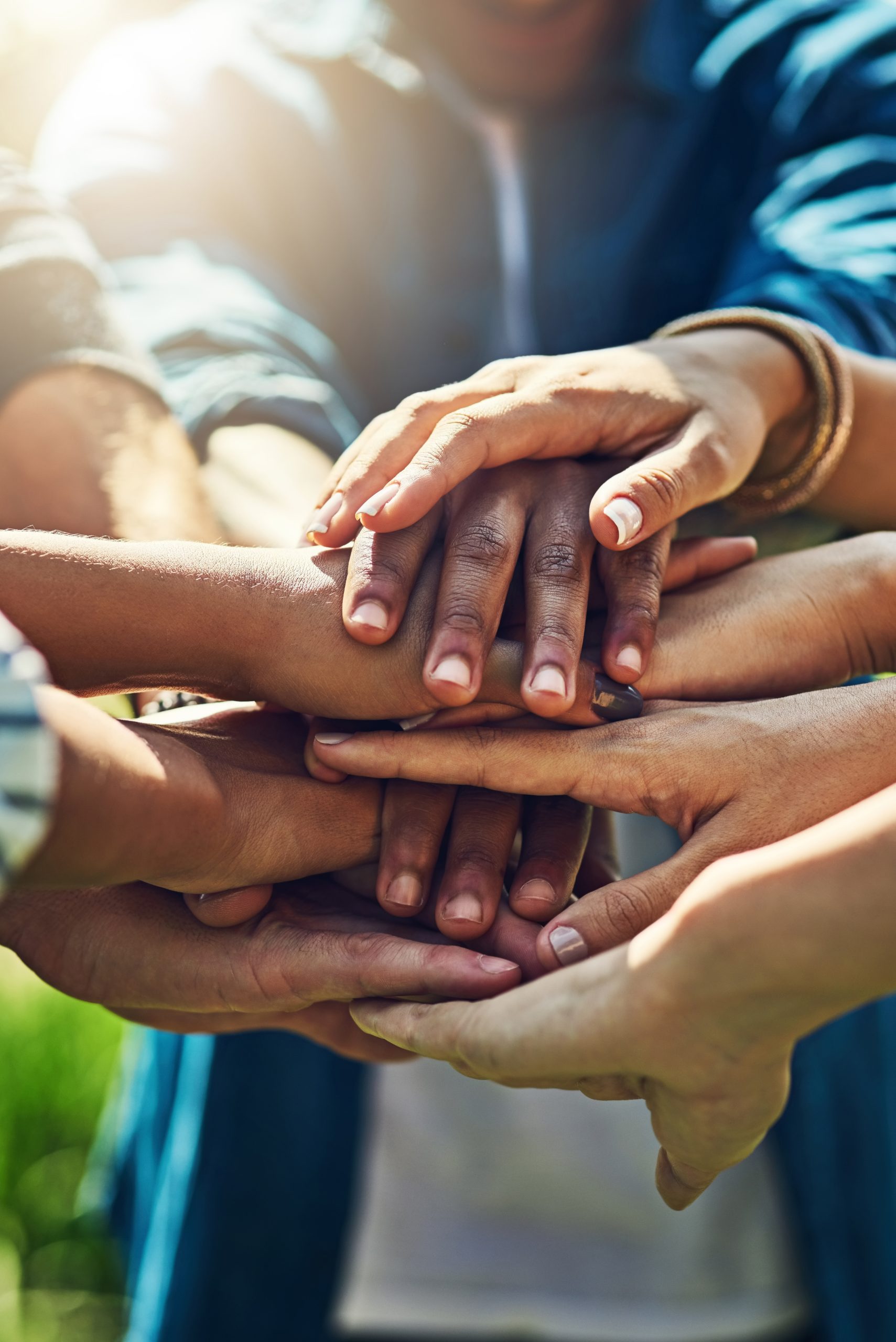
Outdoors. A small group of people with varying skin tones have their hands in a pile together in unity. Only hands, arms, and torsos are visible. Those with visible torsos are dressed casually.

Security, stability, and found family are aspects of community building that have defined my experience as an autistic Afro-Caribbean woman in the rural South. During my adolescence, I witnessed and experienced community support for the first time through my neighbor Gloria—a physically disabled 40-year-old Haitian woman. Coming from a low-income family in Georgia, I didn’t have access to or knowledge of accommodations for my autism. However, Gloria showed me how sanctuary and support can be found within your own communities. 

Starting at the age of 10, Gloria’s house became a constant where I experienced acceptance and care. She regularly provided free childcare while my parents worked. At this time, I struggled with sensory issues and communicating my needs. When I couldn’t express myself verbally, Gloria gave me my first journal and said, “When your heart is heavy, write your thoughts.” I didn’t know this way of communicating was an option; I felt seen for the first time in that moment.

I used the journal as a way to express myself when I went nonverbal. When I wrote down that bright lights and loud noises were “too much,” Gloria lit candles and quietly played a Looney Tunes cassette tape on her TV for me. At the time, I didn’t realize she was creating an accommodating environment for me to peacefully exist. She gave me an outlet, sources of comfort, and deep understanding. 

In turn, I spent weekends with my mother kneading dough to make Johnny Cake biscuits and fried fish as a way to show my gratitude. It was difficult for Gloria to stand for long periods to cook, and I wanted to show her the same support she’d always shown me. When I brought the home-cooked food to her, she replied, “Men anpil, chay pa lou.” She taught me that the Haitian proverb means “many hands make the load lighter.” Gloria made my life lighter. This communal exchange taught me how community care can support you in the face of limited resources and lack of government assistance. 

Through my experience with Gloria, I found that the immigrant and disabled experiences in the rural South are interwoven identities. The lack of state policies and inadequate implementation of those that do exist force these communities to face challenges disproportionately. Southern states possess the nation’s highest rates of poverty and the largest demographic of disabled people. Similarly, immigrants are subjected to high social and political scrutiny despite the South being home to 35% of the nation’s immigrants.

These intersectional identities highlight the need for immigrant and disability justice. There are marginalized members of your community who may not have the same consistent and intentional support Gloria gave me. Belonging and inclusivity are created within community and we need to be there for one another. As national tensions grow, intercultural, cross-disability, and person-to-person connection will become lifelines for many. Will you lend a hand to make the load lighter?


The author (she/her) is a queer writer and illustrator residing in the South on the east coast of the U.S.

About Rooted In Rights

Rooted in Rights exists to amplify the perspectives of the disability community. Blog posts and storyteller videos that we publish and content we re-share on social media do not necessarily reflect the opinions or values of Rooted in Rights nor indicate an endorsement of a program or service by Rooted in Rights. We respect and aim to reflect the diversity of opinions and experiences of the disability community. Rooted in Rights seeks to highlight discussions, not direct them. Learn more about Rooted In Rights

The Disability Joy Jar: A Survival Recipe for Tough Days

Outdoors, day. A clear container with a dark blue top sits on a light blue and red surface. It is filled with strips of white paper with typed words on them. It's surrounded by potted green plants in the background.

When chronic fatigue or inaccessible spaces weigh me down, I turn to my Disability Joy Jar: a small mason jar brimming with scraps of paper, each holding a spark of joy or a survival tactic born from disability wisdom. This simple tool, built from navigating a world that often excludes us, is both my personal lifeline and a gift to our community. It’s a way to thrive and share resilience amid turbulent times.

The Joy Jar was born after a grueling day of endless forms and dismissive systems. Feeling defeated, I recalled late-night chats from a disability justice retreat—moments where we swapped hacks and hopes. I began jotting down ideas that keep me grounded. One slip says, “Stream that Deaf comedian’s special on YouTube—free, with captions.” Another: “Join my crip book club’s virtual meetup.” A third: “Listen to a library’s accessible audiobook by a wheelchair-using author.”

These notes, some pointing to digital resources like online communities or X posts by a Blind poet, are my rebellion against burnout. The jar is physical, but its contents bridge the tangible and digital, reflecting how we navigate both worlds.

Making a Joy Jar is easy and inclusive. Use any container: a jar, a box, or even a phone app. Write down strategies and resources that resonate, such as a link to a free virtual disability film festival, a reminder to join an online support group, or a tip to schedule rest like a sacred ritual. You can start today by picking one idea, like a note to celebrate a small victory or a link to an accessible workshop, and share your tips in community spaces—our resilience grows when we exchange it.

On a tough day, I pulled a note suggesting an accessible yoga class online, turning isolation into connection. By sharing these strategies in community forums or group chats, our wisdom grows, weaving the jar into our movements for liberation. This aligns with disability justice’s call for sustainability, ensuring we thrive as individuals to sustain our collective struggle.

In a society that often marginalizes us, this jar is a quiet revolution. It celebrates our ingenuity and calls us to keep going. What will you add to yours?


Shivank Pandey (he/him) is writer dedicated to fostering resilience and community among disabled individuals he shares strategies for thriving in an often inaccessible world, drawing from personal experiences and collective wisdom.

About Rooted In Rights

Rooted in Rights exists to amplify the perspectives of the disability community. Blog posts and storyteller videos that we publish and content we re-share on social media do not necessarily reflect the opinions or values of Rooted in Rights nor indicate an endorsement of a program or service by Rooted in Rights. We respect and aim to reflect the diversity of opinions and experiences of the disability community. Rooted in Rights seeks to highlight discussions, not direct them. Learn more about Rooted In Rights

Caregiving, Depression, and Poetry

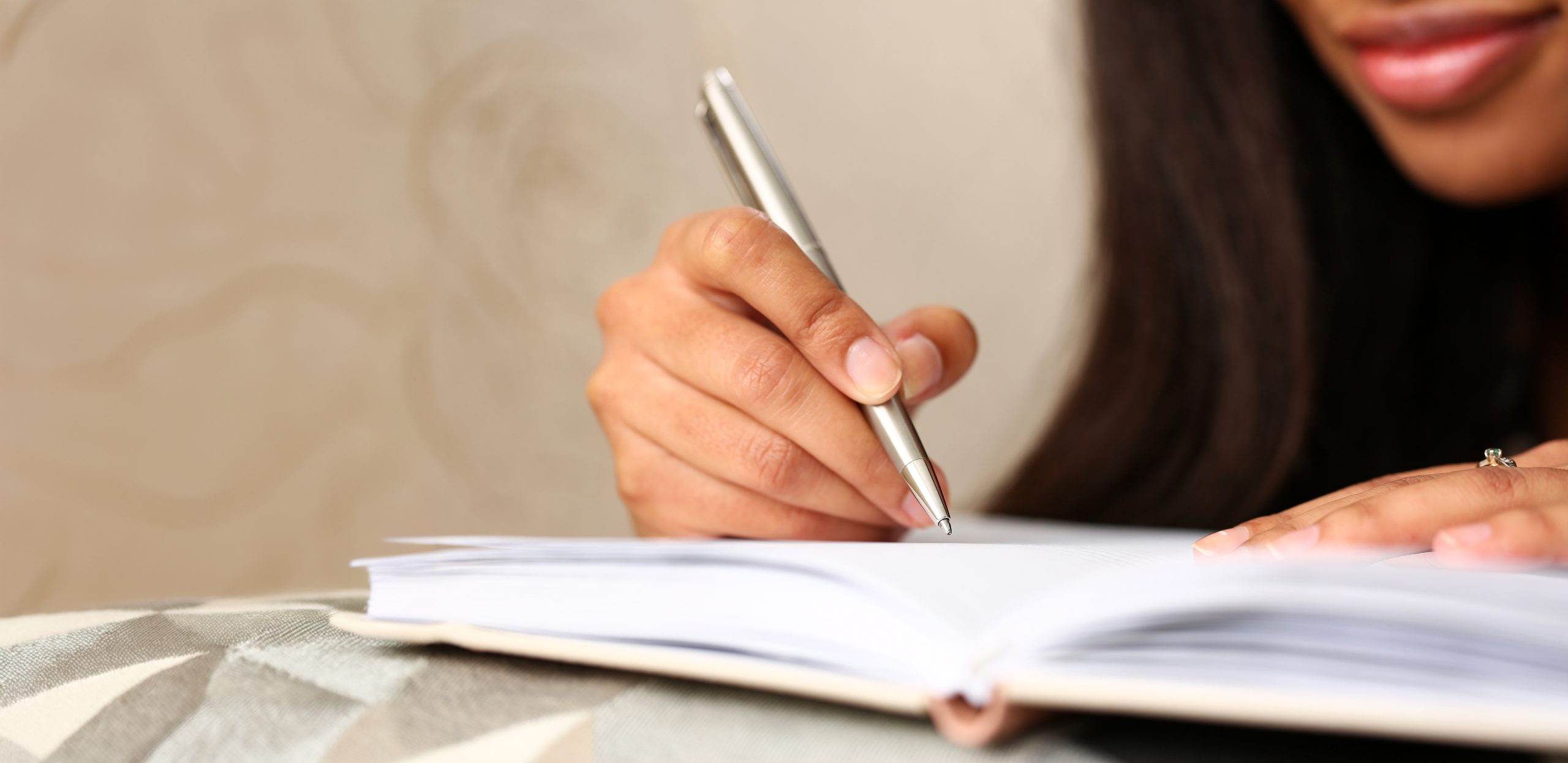
A light brown-skinned Black person with long, straight dark hair has a journal of some kind open in front of them as they use a silver pen to write inside of it.

Since I was thirteen years old, I’ve used poetry as one of my outlets for depression. Whether reading poems by someone else or writing my own, poetry has helped me find meaning in my emotions and experiences. As a Black-Asian queer person who became an unpaid family caregiver in adulthood, poetry has become a vital coping mechanism for my continued survival.

When you are creative and marginalized, you’re taught by capitalism to define your worth by how often you create, how much you create, and how much praise and how many accolades you get. I often remind myself that just because I only write once a month or go months without writing, doesn’t mean that I’m not still a poet.

For the first nine years being my mother’s caregiver, I moved away from my poetry practice. By 2022, I was tired of numbing my feelings. My depression worsened in those years when I couldn’t make time for self care and creativity. I wanted to acknowledge my emotions and discover my true poetic voice. I made time to read poetry during the evening when my mother went to bed. I rediscovered poetry beyond what I’d been taught, reading pop culture and video game poetry at online literary magazines such as FreezeRay Poetry and Videodame.

One particular poem inspired by the video game series Kingdom Hearts rekindled my passion for poetry. By seamlessly weaving together events from the game with the author’s personal feelings, this poem demonstrates that video games are an art form that can provide catharsis and inspire other art. It inspired me to write my own Kingdom Hearts poem, “Limit Break”.

Partly inspired by my replay of the video game “Kingdom Hearts 358/2 Days” and my own experiences with depression, “Limit Break” was a cathartic way to acknowledge my mental health. Like the Kingdom Hearts’ character Roxas, I turned my pain into power. By writing this poem, I was able to show myself that even at my lowest point, I can call on the strength to keep living and fight my personal demons. When it was published at the video game criticism website Into The Spine, it also reaffirmed my identity as a poet.

After I wrote “Limit Break”, I decided that making time for poetry was necessary for my survival. While doing this, I also remembered to be kind to myself as a person. If I had time during the day between freelance work and caregiver duties, I’d check out at least one online literary magazine. Or I might read a poem from a book I already owned. If I felt inspired or compelled to sit with my feelings during the evening, I’d type up random lines on my phone.

Writing poetry has reminded me that I am more than a caregiver. I’m a person whose feelings deserve to be acknowledged in whatever way I choose. Through poetry, I express my emotion and imagination to find meaning, peace, and beauty amid a stressful life. Writing poems makes living with depression possible by giving my heart a voice so I don’t suffer in silence.


Latonya “Penn” Pennington (they/them) is a caregiver, poet, and freelance writer. Their poetry has been published online at Videodame, All My Relations, and Sage Cigarettes, among others; meanwhile, their freelance work can be found at online publications such as Pop Heist, Into More, and Yatta-Tachi. You can find them on Bluesky and WordsFromAPenn.

About Rooted In Rights

Rooted in Rights exists to amplify the perspectives of the disability community. Blog posts and storyteller videos that we publish and content we re-share on social media do not necessarily reflect the opinions or values of Rooted in Rights nor indicate an endorsement of a program or service by Rooted in Rights. We respect and aim to reflect the diversity of opinions and experiences of the disability community. Rooted in Rights seeks to highlight discussions, not direct them. Learn more about Rooted In Rights

(Junk) Journaling Toward Connection

A photo of a pile of writer Cavar's junk journals. They're situated in a light green nook, stacked on top of each other.

Sometimes (oftentimes) writing is the kind of thing we need to back ourselves into. Facing forward, diving in, especially from great proverbial heights, is simply Too Much—for those who don’t see themselves as writers and, perhaps even more so, for those who do.

As a writer, I’ve never struggled with the blank page per se. My struggle rests more solidly in the messy page, the “useless” page, or the “unproductive” page. While anxieties over whether or not my drafts will ever be worth reading remain pervasive even through books, contracts, and praise, there is also a critical space of respite in my writing life that I’d like to share with you: my “junk” journal.

I started journaling daily when I was 11. I spent all of my adolescence doing so in the simplest possible way: opening a notebook, writing some things about my day (sometimes only a sentence’s worth), signing off. It was tedious, but I’m stubborn and hate change, so I continued writing carelessly—often illegibly—through my adolescence. 

When I moved to college, I anticipated homesickness, so made an agreement with my mother to change up my journaling practice: every day, I’d write three to five things that happened that day (usually good, often small) and send her a picture of the page. It was in these moments that my

17-year-old self realized that the “solo” act of journaling was in fact a space of profound connection.

Of course, one connection that I strengthened was the one with my mother, who I was eager to form an adult relationship with after years of tension related to my psychiatric crises. But, as I wrote, there were also other, subtler connections realized between the pages of that journal. I understood the importance of my newfound friendships, the transformative impact of my now-open trans life, and my personal and creative growth in a space away from home.

This creative growth has manifested in a number of ways since my undergraduate years. Now, at twenty-six and nearly finished my PhD, each of my journals remains an archive of complaints, jokes, and vital moments of gratitude. It has also, crucially, become a house of junk. By junk, I refer affectionately to receipts and plane tickets, stickers and greeting cards, characters and illustrations cut out of packaging. Anything that can be (washi) taped into any notebook is fair game, especially if it carries emotional weight.

These pieces of junk help to accessorize my journal. They offer me the opportunity to tape and stick when I don’t feel like writing much. They also remind me of my connections to other people, my experiences both past and potential, the relationships and opportunities that not only make these journals worth keeping, but also make my life worth living.

As a disabled, Mad writer, I’ve been asked many times whether I maintain my journal as a form of catharsis for what may be paternalistically described as my “racing thoughts” and “big feelings.” While conventional “mental health” advice typically invokes the journal as a method for coping with extreme emotions or overwhelming thoughts, my experience has been quite the opposite: digging too deep into fresh thoughts and emotions is more likely to amplify a crisis than to mitigate it. When I write my feelings, I do so on my own timeline, sometimes years after a given event occurred.

Beyond this, my experiences of surveillance and institutionalization are a grim reminder of the risk I take by putting pen to paper, even now, as an adult who lives independently. For those of us who have been taught not to trust our own perceptions, or for whom journaling has at times been a requirement to fulfill “for our own good,” reclaiming the page as a space for junk can be a political act. My journal is not a confessional, but an archive of things that would otherwise have been thrown away, largely disposable things that I have instead chosen to keep and even treasure.

We are the sum of our connections and experiences. The practice not only of journaling, but of junk journaling, can help us move beyond the feelings of isolation and dread associated not only with the blank document, but within a world hostile toward disabled and Mad experiences. Yet the blank document can also pose near-infinite possibilities for those of us accustomed to stories pre-written for us, those of us aching to break out of normative frameworks of value. In this way, my journal is a supplement to the rest of my writing, reminding me that I am the one who gets to choose what I put on the page, and when, whether it’s an emotional passage, a sticker, or an old grocery list.

It’s okay to be overwhelmed by the idea of journaling, of staring down the blank page and eventually putting something on it. Rather than waiting for the perfect moment, consider grabbing a pen, tape, and some junk, just to see what happens. Even in moments of darkness, the page can be a place to document the quotidian joys and tiny artifacts life always has to offer us, and serve as a necessary reminder that we get to choose if, when, and how to tell the stories of our lives.


[sarah] Cavar (they/them) is the author of Failure to Comply (featherproof books, 2024) and Differential Diagnosis (Northwestern University Press, 2026), with genre-nonconforming writing in Kairos, The Rumpus, Transgender Studies Quarterly, Electric Lit, and elsewhere. They hold a PhD in Cultural Studies with a concentration in Science & Technology Studies from the University of California: Davis, and are interested in the politics of queercrip & transMad knowledge production. More at their website, Bluesky, and their newsletter.

About Rooted In Rights

Rooted in Rights exists to amplify the perspectives of the disability community. Blog posts and storyteller videos that we publish and content we re-share on social media do not necessarily reflect the opinions or values of Rooted in Rights nor indicate an endorsement of a program or service by Rooted in Rights. We respect and aim to reflect the diversity of opinions and experiences of the disability community. Rooted in Rights seeks to highlight discussions, not direct them. Learn more about Rooted In Rights

Bullseye

A fair- or possibly light-skinned person seen from the neck to the hips. She's wearing a tan or light pink top with a burnt orange cardigan over it and blue jeans with a light brown belt. With shoulder length dark hair, she reaches out her hand for a handshake and friendly 'Hello."

“Yep, I’m partially blind.”

“No, glasses don’t help.”

“Yes, I can get around on my own, in familiar places.”

I do not begrudge for a minute the questions I’m asked anytime I meet someone new and, for example, they see me trying to read. I’ve subconsciously developed a sort of scripted response to the more common questions about my disability.

It goes something like this: “I have bullseye macular dystrophy. It’s a blind spot, shaped in rings, right in the centre of my vision. If I look directly at you, I can’t see you. If I look up, I’m not rolling my eyes; I’m just trying to see your face in case I missed a cue in an expression.”

I hold my fist up in front of my eyes to demonstrate, then I continue. “It’s like macular degeneration, but different. So if I see you and don’t smile or say ‘Hello,’ it’s not because I don’t want to. I just don’t know that it’s you.”

I love talking about my vision: the way I see fascinates me but, more importantly, it’s very useful to me for people around me to understand that I can’t see like them.

I never know who’s around me unless they’re where I normally see them or someone whispers the name of the person approaching. Or, my favourite, when people say “Hi Leslie, it’s [insert name].” I can’t tell you how much of a joyful relief it is when people initiate contact and identify themselves early. Otherwise there’s a very awkward period of trying to guess and not knowing how to act.

It’s hard for me to initiate contact because I’m unable to see faces, so I don’t know if I’m smiling at a person or a bush. For months, I smiled and waved at my neighbour who was always in the same place in his yard, only to later discover that it was actually his garden hose hung on the wall.

It can be lonely. So I cherish the opportunity to “explain about my eyes.” It adds that person to my small, sometimes isolated world—one more person I don’t have to worry about accidentally offending by not saying hello. I can breathe a little easier.

I don’t know if others with a disability feel the same way , but it seems to me that well-intentioned questions are useful and kind, even if they do get a little repetitive. Sadly, there’s no real set of rules to follow when talking to someone about their disability. Even the golden rule doesn’t apply because you can’t know how you would feel in that person’s situation. Everyone is different.

But don’t let the uncertainty deter you. Just like with anyone you talk to, take cues from them, try not to make assumptions about someone’s needs or beliefs, apologize if you cause offence, even if you don’t understand why. 

But most of all, please don’t avoid the conversation just because it might be awkward for a moment. 

As I said once on social media while letting more friends know about my diagnosis: “I look like I can see you, but I can’t see you. If you see me, please say hello. Whoever you are, I miss you.”


Leslie Schmidt (she/her) is an American-born Australian, mother, sculptor and crafter. She has a Bachelor of Visual Art from Monash University. Leslie specialises in making custom, weighted stuffed animals to help with anxiety or sensory sensitivity (or as a baby stats keepsake).

Rooted in Rights exists to amplify the perspectives of the disability community. Blog posts and storyteller videos that we publish and content we re-share on social media do not necessarily reflect the opinions or values of Rooted in Rights nor indicate an endorsement of a program or service by Rooted in Rights. We respect and aim to reflect the diversity of opinions and experiences of the disability community. Rooted in Rights seeks to highlight discussions, not direct them. Learn more about Rooted In Rights

Fired During Accommodations Application: Reflections from A Black Autistic Worker

A Black person with short dark hair and glasses in a light-colored, short-sleeved shirt seated indoors at a laptop with a look of dismay on their face, hands clasped together covering their mouth.

One of my greatest dreams is financial security. Not just so I can live my life well, but so I can dream about living. Period. Also, financial security almost guarantees health insurance; my medication costs $300-1,000 per month without insurance.

When I couldn’t be claimed on my parents’ plan anymore (which is in itself a privilege), all I could think whenever I clocked in at any job was, “I get to stay in therapy. I get to take my meds. I get to keep breathing.”

Four years ago, I quit my customer service job because masks weren’t enforced. Thankfully, I found an apprenticeship that would start within two months and allow me to get my Associate’s degree and work virtually. 

I spoke at a global panel on invisible disabilities about four months into the second year of my apprenticeship. Colleagues reached out to me afterwards asking for resources and looking for support. I felt like I’d finally figured out a place where I could fit in at this company. 

Three months before my scheduled graduation from the program to full-time employee, I came across a work email that mentioned an institution known for child abuse. I had a PTSD flashback and requested the rest of the day off. I’d never done this before—tell someone the truth in a way that could help me. But this time I asked for help. In hindsight, I feel like I made a terrible mistake. 

Less than a week later, I was put on probation. Then I got COVID. I struggled with tasks that I’d already needed help with in the past; COVID brain fog and exhaustion made it worse. I explained to my bosses that I needed more time, more help. They encouraged me to take care and get better. My career counselor, God bless her, helped me update my accommodations request (closed captioning, extra time to respond) and apply for FMLA (Family and Medical Leave Act).

In 2023, across all levels of education and age groups, people with disabilities were much less likely to be employed than their counterparts without disabilities. As an organization that played up its commitment to diversity and inclusion, I’d hoped that there’d be more understanding as I attempted to find my place at work.

But, as shown in many companies, “diversity and inclusion” is more of a box to check off than a commitment to fulfill between employer and employee. This is extremely dangerous as Black disabled people are among the communities recorded to have high unemployment rates. Coupling that with anti-Blackness and misogynoir can make living day-to-day extremely difficult, if not near impossible.

Less than a week after I had gotten off the phone regarding my FMLA application, I was fired. When they pulled me into the Teams meeting to fire me, they didn’t even alert my counselor so that she could support me. It wasn’t the worst they could’ve done. At least they remembered to turn the captions on. 

Refusing to adhere to a person’s accommodations eliminates a person’s autonomy, making it difficult—if not impossible—to show up in a space. I couldn’t show up for work because I was spending energy meant for accomplishing tasks to advocate for my right to exist.

I’ve advocated for myself and others in work situations before and I’m tired. I’m tired of being seen as less than (not just due to disability, but race, gender, and sexuality–which are inextricably linked to and inform my disability). I’m tired of doing the work to be seen whereas others are treated as human without a second thought. I’m tired of my work being punished and I’m tired of being punished when I’m too burnt out to do the work necessary to be seen.

I’m something beyond exhausted and have been for years. And still…it’s not enough. I write, advocate, and show up and the world still tells me and my communities that we aren’t enough. What else can I possibly do?


A. Tony Jerome (they/them) is a Black, autistic multi-disciplinary artist. An Aardman Academy Stop Motion I graduate and 2024 Game Devs of Color speaker, you can find their work in The BreakBeat Poets: Volume 2, baffling magazine, and Freezeray Poetry, among others. They’re here to do good and do gay. You can find them at atjscreams on Bluesky and on their website.

Rooted in Rights exists to amplify the perspectives of the disability community. Blog posts and storyteller videos that we publish and content we re-share on social media do not necessarily reflect the opinions or values of Rooted in Rights nor indicate an endorsement of a program or service by Rooted in Rights. We respect and aim to reflect the diversity of opinions and experiences of the disability community. Rooted in Rights seeks to highlight discussions, not direct them. Learn more about Rooted In Rights
For Chronically Ill People, The Path to Financial Security Is Anything But Straight

Outdoors, day. A tiny red umbrellla sits on a table. It is partially protecting five stacks of gold coins, organized from left to right from the biggest to the smallest stack. Some unstacked gold coins are strewn around the stacks.

At age twenty-nine, I sat in my doctor’s office. I’d spent the year relearning to walk, read, and function as an adult again—after battling severe brain inflammation, for the second time in my life, caused by my chronic illness. “Every five to six years, you are likely to get this sick again,” my doctor told me gently.

As I walked out of the office, one worry hovered over me like a storm cloud only I could see. As a single woman without a family to provide me with financial support, how could I possibly stay afloat? 

After that appointment, I began checking my bank account multiple times per day. I rarely go shopping or take vacations, instead pinching every penny in anticipation of the years in which I’m unable to work. I accept nearly all the freelance work that comes my way, squirreling the money away in my savings account. Even at my healthiest, the daily symptoms of my disease prevent me from working full-time. Other people might see a childless woman with no dependents when they look at me. But in reality, I have a dependent: the sickest version of myself. 

Many people in the U.S. see Social Security Disability payments as a cure-all for people who are too sick to work. But, as someone who has both been on disability and written articles about it, I know firsthand that Medicaid and Social Security Disability do not adequately meet the needs of the dynamically disabled.

The obstacles to being approved for SSI and SSDI are substantial and include: needing to be disabled for at least six months before applying and a time-consuming and often expensive application process. At best, being approved for disability benefits results in low payments that force recipients to give up even part time work or live below the poverty line. Chronically ill U.S. residents like me, who spend some years able to work and some years suddenly unable, frequently fall through the cracks. 

My anxiety about not having enough money during the years I can’t work drives me to devour financial vlogs looking for help and advice. I spend hours calculating and recalculating how little I can live on and for how long. I’m terrified of not having enough to support myself when I’m inevitably too sick to work. Meanwhile, my nondisabled peers are increasing their net worth through steady employment and raises, contributing to retirement, and building equity in real estate.

The U.S. is a country that values productivity and assumes a straight path from the start of one’s career to retirement. For those like me whose careers are frequently interrupted due to health issues, this path is less straightforward and effectively prevents us from building wealth. If the financial road that I and other dynamically disabled people travel had a warning sign, it would say: Expect Frequent Stops.


Meghan Beaudry (she/her) lives with lupus and is a patient advocate for lupus.net. Her essays have been published in NBC Today, HuffPost, and Salon. She is working on a memoir about her recovery from autoimmune brain trauma.

Rooted in Rights exists to amplify the perspectives of the disability community. Blog posts and storyteller videos that we publish and content we re-share on social media do not necessarily reflect the opinions or values of Rooted in Rights nor indicate an endorsement of a program or service by Rooted in Rights. We respect and aim to reflect the diversity of opinions and experiences of the disability community. Rooted in Rights seeks to highlight discussions, not direct them. Learn more about Rooted In Rights

Leveling the Playing Field for Autistic Parents and Parents with Disabilities

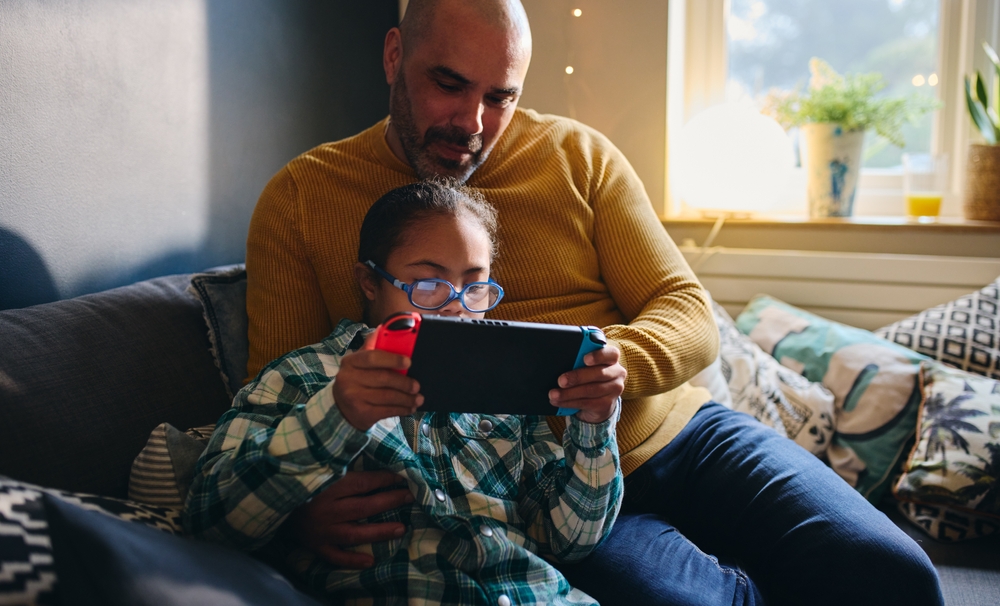
Indoors, day. A father, a light-skinned Black man, and his child, light brown-skinned, sit on a couch together as the child, wearing glasses, plays on an electronic device. The father watches.

It’s 5:45 in the morning and her feet patter into the room. She gets into the bed, rests her head next to mine on the pillow. “Ruff”. “Meow”. “It’s time to wake up, daddy!” I turn and say “Ruff! Good morning, Kenzy. Did you sleep well?” It’s officially time to start the day.

I’m an autistic, biracial Black, transgender person with multiple disabilities. I am also a parent, like any parent. But because of externalized and internalized stigma, I felt that being an autistic parent made me “less than” for the first year and a half of my daughter’s life. While, like most parents, I’m still learning and growing, I now know that being an autistic parent with multiple disabilities does not make me “less than.” However, it does bring a mix of its own challenges, extras, and superhero powers to the game.

In the beginning, I read all the first-time parenting books and figured out some strategies. However, I developed very few practical tips for how to be a multiply disabled autistic parent. Additionally, having an infant and toddler during the COVID -19 pandemic didn’t really provide time to learn the invisible, unpredictable rules of the game. So I took the same approach to the parenting game that I did the college and work games.

This gave me greater self-awareness in connection to being an autistic parent with multiple disabilities. This self-awareness leveled the parenting playing field by teaching me:

● Every parent on the field is a parent to their child. I need to take time to know my child as an individual.

● If I’m focused on comparing myself to other parents on the field, I trip and fall.

● When I meet my own basic self-care needs, I have the energy and ability to better meet my child’s needs in a regulated way.

● I discovered that flexible routines made a big difference in engaging in the activities of the day by helping my child and I with our emotional regulation and easing transitions.

● I will be out of my sensory safe zone and comfort zone a lot. What do I need in my first aid self-care kit?

Community building: I’m always looking to grow my autistic parent community, as well as my other parent-identity communities (LGBTQIA+, disabled, adoptive, etc.). I see a therapist who fits my specific needs. Finding support in books, music, classes, and programs has helped me know I’m not alone on this parenting journey.

Strategizing: As an autistic parent with multiple disabilities, I give myself permission to do things differently. I look at event accessibility and agendas ahead of time. I pick times when it’s not too crowded for shopping and activities. I utilize sensory-friendly and times for public community activities. I also find that mobility-accessible times for outdoor events and playgrounds for all are a great way for me to be a part of activities with my family.

So, what are some ways that YOU can support autistic parents and parents with disabilities?

● Challenge implicit and explicit bias regarding autism and autistic people. To do so requires learning about autism and the autistic community from sources provided by autistic people. This requires asking, listening, and learning from us while honoring our experiences.

● Find out which communication methods for giving and receiving information, including assistive technology, work best and use them consistently.

● Ensuring accommodations are available and easily accessible in all environments and events where children and their parents/guardians are served.

Ultimately, I started this journey because I just wanted to know that I was capable of being a good dad. But as an autistic parent with multiple disabilities, I want to remind other parents that you are not alone. Though we’re in different spaces and places or at different stages of parenting, we’re all on this journey together. We’re learning, growing, and parenting one moment at a time.


Kris McElroy (he/they) is a writer, artist, advocate, public speaker, and human services professional. He identifies as an autistic biracial transgender man with multiple disabilities who enjoys spending time with his wife and family.

Rooted in Rights exists to amplify the perspectives of the disability community. Blog posts and storyteller videos that we publish and content we re-share on social media do not necessarily reflect the opinions or values of Rooted in Rights nor indicate an endorsement of a program or service by Rooted in Rights. We respect and aim to reflect the diversity of opinions and experiences of the disability community. Rooted in Rights seeks to highlight discussions, not direct them. Learn more about Rooted In Rights
Working While Schizophrenic: Becoming Out and Proud

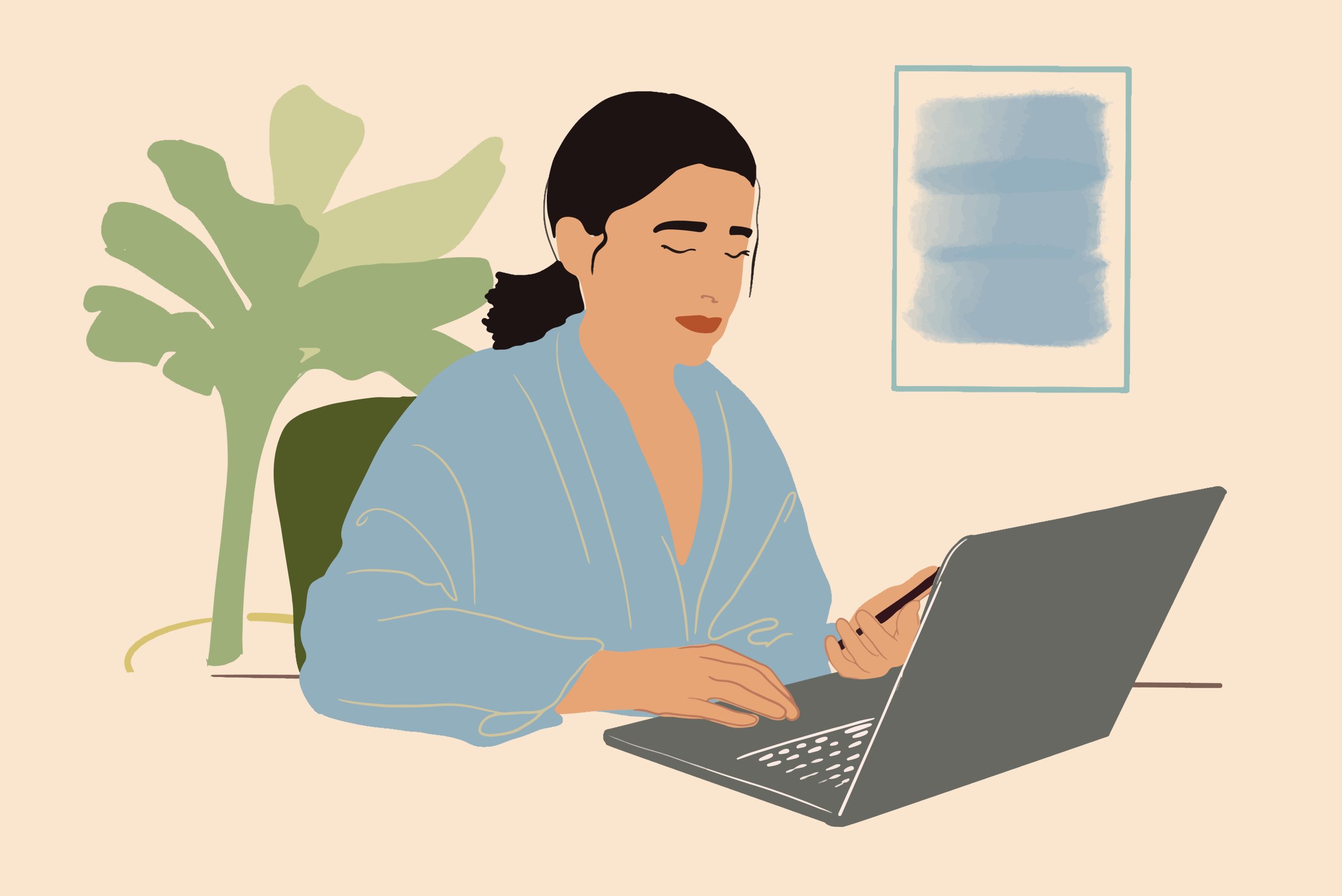
A drawing of a woman with olive skin and black hair sitting in front of a grey laptop. A green plant and blue painting are in the background.

My parents didn’t like that I, as the only Kerenza Ryan on social media, wanted to announce to the world that I am schizophrenic. Too big of a risk in my job hunt. I listened at first, changing my name on my profiles to avoid immediately showing up to employers.

But I’ve always wanted to be a writer, and I wasn’t going to stop publishing my pieces. I started in smaller magazines and eventually published a poetry collection called “I Am Schizophrenic.” Talk about obvious.

Jobs aren’t allowed to ask whether or not you are mentally ill. I do remember one, in particular, asking if my “writing” got in the way of my job. That was not a position I was hired for. Another employer  later cried about the way I deal with the physical health problems that come with my medication regimen (this while I worked in a doctor’s office, no less).

I was hospitalized twice; both times it affected my work. One boss mistakenly thought I went to rehab and I chose not to correct her—I wasn’t “out” yet. The second boss hadn’t yet read my work, but I told her anyway. She thanked me for sharing my secret. I explained it wasn’t a secret—many people knew. The fact that you could be schizophrenic and have it not be a secret shocked her.

Secret or not, sharing this information has been scary. There is at least one job I think I would have been more likely to get without having published my poetry collection. There is also at least one job I think I got because of the book.

Getting jobs has only been the beginning: I’m also affected once I have one. Sometimes, the boss wants to know what kind of “sick” you are. In that moment, you have to decide whether or not to say “The voices are particularly bad today.” 

 I don’t want to give the cookie-cutter response “If they don’t want all of me, they don’t deserve any of me,” but I will say this: I work hard. My schizophrenia has made me work hard. When I was so sick that I had the common delusion that nothing was real, including fast food nachos, I still worked at a restaurant where I bagged chip after chip.

As someone who has worked in mental health, I am aware not just personally, but also professionally, how hard it is for people with mental health disabilities to find a job. When the job search is combined with the homelessness, poverty, drug abuse, or simply an increase in medical appointments that goes with having a mental health disability, I watched person after person struggle.

But I have also seen many people get jobs. I’ve even worked at length to help people publish stories about their mental health disabilities. And I tell them it’s a great idea—because it is. For me, I’m not going to change my online presence for the voices in my head or the voices without.


Kerenza Ryan (she/her) is schizophrenic (and doesn’t mind labeling herself as such) as well as having celiac disease and PTSD. She is a kindergarten teacher and a ghostwriter; her work can be found on her website. When not writing or teaching, she enjoys reading, hiking, and lazing around with her girlfriend, something her girlfriend calls “potatoing.”

Rooted in Rights exists to amplify the perspectives of the disability community. Blog posts and storyteller videos that we publish and content we re-share on social media do not necessarily reflect the opinions or values of Rooted in Rights nor indicate an endorsement of a program or service by Rooted in Rights. We respect and aim to reflect the diversity of opinions and experiences of the disability community. Rooted in Rights seeks to highlight discussions, not direct them. Learn more about Rooted In Rights

The Power of Understanding in Neurodivergent Marriage

An illustration of two gold wedding rings, intertwined with each other. The one on the left has a red heart at the top. The one on the right has three straight black lines jutting out of the side, as if meant to indicate shininess or brightness.

EDITOR’S NOTE: We deliberately maintain British spellings for writers who write in British English

Since realising we’re both neurodivergent, my partner and I have become each other’s safe places to be our full selves.

It wasn’t always this way. Some of the things we did—or couldn’t do—didn’t make sense to us pre-knowing. Ignorance of ourselves spiralled into wondering if we made sense together. Learning about our neurodivergence revealed what we always had, beyond neurotypical standards of love, romance, and marriage.

I’m not a romantic person, not in words and gestures. I don’t always know what to say to reassure her when she’s down. During a depression, she rarely wants to be loved up anyway, preferring her space and solitude to work through it.

We’re still there for each other when it matters. We have long conversations deep into the night when we’ve had some time to process thoughts and emotions on our own. Those marathon talks often lead to shared epiphanies that bring us closer, help us help each other. I first shared my suspicion that I was autistic in one of these moments.

We have our own love language, one of intuiting what the other is about to say from sharing a script of memes and intense interests. We mirror and match each other, our strengths complementing each other’s weaknesses. She’s the practical one who pulls me back to ground level when I’m floating away with impulsive excitement. But, though this might sound contradictory, I can keep my cool in a crisis if she’s falling apart from panic.

There’s structure to how we connect in joy and hardship. It might seem illogical, or just plain weird, outside of autistic love. But it nourishes us in ways we’re just learning the terminology for.

Differences in how we see and remember details means I don’t have many vivid memories of our life considering our almost 12 years together. Luckily, she holds and reminds me of them, like our various boxes of tickets, letters, and other memorabilia that get buried and resurface in cycles.

What works for us in our own bubble gets tough when outside life does. Money, work, and dealing with neurotypical people all dig up our separate pains and frustrations. Fear, anxiety, and self-loathing make us lash out at each other still.

But that’s okay. We know the feelings of not fitting together come from social norms that say that the ways we love, function, work, and exist are wrong and unacceptable. We know each other well enough to realise that now, and we let the anger and sadness be when that’s all we can do.

In his article discussing Black autistic visibility in Boots Riley’s I’m a Virgo, poet Cyrée Jarelle Johnson writes that “Being with another exceptional person removes the need to hide.” Coming out of hiding from ourselves was a step taken towards that comfortable freedom.

There’s no map for neurodivergent marriage; our love is its own landscape. We’re filling it in as we go. But it’s been much easier since we’ve known how to traverse that together. We are exceptional, because we’ve figured out our own ways to care for each other.


W.E. Cuthbert (they/he) is a queer, AuDHD, Pagan witch who writes because it’s magic. A regular name and podcast guest at Metro UK, they’ve appeared in The Nation, and featured in the first ever Trans+ History Week. He’s also a dorky softie who loves music, mythology, and making friends with trees.

Rooted in Rights exists to amplify the perspectives of the disability community. Blog posts and storyteller videos that we publish and content we re-share on social media do not necessarily reflect the opinions or values of Rooted in Rights nor indicate an endorsement of a program or service by Rooted in Rights. We respect and aim to reflect the diversity of opinions and experiences of the disability community. Rooted in Rights seeks to highlight discussions, not direct them. Learn more about Rooted In Rights

Out and Proud at 71: A Retrospective on Queerness and Disability

Illustration of a brown-skinned person's legs and feet. They're wearing white shorts and white sneakers with rainbow patterned socks. They have a white cane.

CONTENT NOTE: ableism

Today, at 71, I’m an out and proud queer, disabled, cisgender woman. I’m also a writer and poet.

I’m open about being legally blind. Tapping my white cane, reading my poetry from text blown up large on my iPad, my low vision is out there for everyone to see. Being low vision is as natural to me as breathing.

Like many of us who came up in a culture steeped in anti-queerness and ableism, I still find myself, from time to time, drowning in moments of shame. I recently found myself apologizing when I saw my eye doctor. “I’m sorry for asking you to dim the lights so I can see the eye chart,” I told the technician.

“You don’t need to apologize,” she said.

Yet, despite these momentary blips of shame, I’m as proud of being a part of the disabled community and disability history as I am of being a part of the queer community and queer history.

But developing pride is far from easy. It takes work. “You get proud by practicing,” the late disabled, queer poet Laura Hershey wrote in her poem of the same name.

I was born disabled. But I didn’t begin to come out and become proud until nearly 50 years ago, in the summer of 1974.

I first learned I was disabled when I was five years old. As long as I said I had some vision (nevermind that it was extremely limited), I could show my face in society. I wouldn’t embarrass my family, scare the neighbors, or frighten strangers.

Being blind was shameful, pathetic—only for beggars hanging out with their tin cups. Except, of course, for the blind musical genius of Ray Charles or Stevie Wonder, who could really sing! Or DeafBlind saint Helen Keller, who’d been “saved” by Annie Sullivan, the miracle worker. (No one ever mentioned that Annie was low vision like me.)

Being a creature of my era I, too, had ableist attitudes towards disability and disabled people for much of my youth. From the time I was a kindergartner—trying to understand why I shouldn’t allow anyone to call me blind—to my early 20s, I was uncomfortable with my own disability and around others with disabilities.

Because I didn’t want to be identified as blind, I didn’t use a cane then, even though I often bumped into walls and sometimes fell down steps. Why did I not get training on how to travel safely—and with self-confidence—with a cane?

But in my junior and senior years of college, I slowly began to feel more comfortable in my skin.

The burgeoning women’s movement (what we now call second wave feminism) began to resonate with me. As a student at a women’s college, I learned that women didn’t have to marry or wear makeup or heels. That we would likely encounter sexism. But we could aim for careers in everything from the arts to medicine and law.

Today I can see what a white, binary version of feminism this was. But it offered liberating possibilities to me and others of my generation, who grew up in a culture of rigid gender and sexual roles. Where a single woman couldn’t get a credit card. A woman who didn’t marry and have kids was considered abnormal (unless she was disabled, of course). And a man would be called “queer” (as a slur) if he cried or liked to cook.

Just a few years after the Stonewall Uprising, I also started to realize (and even enjoy) that I was queer. I’d had feelings that I liked girls since I was 13, but I’d repressed these feelings because “nice” girls weren’t supposed to “like” girls.

But, as I began to hang out with other queer college students, some of whom had marched in Pride parades, I finally began to embrace my sexuality. It would be a while before I had my first same-sex relationship. But I remember watching “The Wizard of Oz” in the late 70s as I held hands with a woman, shortly after I’d come out to myself as queer. I’d never been more happy to see a rainbow!

At this juncture in life, some of my friends and teachers began to nudge me toward at least acknowledging my disability as well, if not outright identifying as disabled. And then I was told about the Perkins School for the Blind in Watertown, a Boston suburb.

I didn’t know what I wanted to do after graduation. But I was ready to live in a city, and I knew I’d need to learn how to safely navigate an urban area. I enrolled in a summer program at Perkins which taught Blind and Low Vision people how to get around safely.

I hadn’t met more than two blind people in my life or crossed a city street alone. I’m not sure which was more terrifying to me: learning to listen to traffic and create an “arc of travel” with my cane or being among a throng of about 50 Blind and Low Vision students and staff.

But I had no idea that this summer would be life-changing.

I began to talk with other Blind and Low Vision people. I discovered that they weren’t “creatures from the Black Lagoon.” Hailing from all over the United States and the world, they were smart, funny and kind. One was a singer who’d performed on talk shows. Another was a baseball fan. Some were cranky. They’d joke about being blind.

We told our stories to each other. I’d often felt that I’d been alone, that I’d been the only one to have been bullied, ridiculed because of my disability. But it turned out that I was far from unique. We’d all been teased, verbally put down, not picked for teams or class offices. Some of us had been beaten up on the playground in elementary school or in the halls of high school.

Gradually, I became aware that there was discrimination against disabled people.

I’d always felt that non-disabled folk didn’t like to be around people like me. But I finally realized that this wasn’t just a “feeling.” Disability-based prejudice was a real thing.

The culmination of my Low Vision coming out process was discovering that people with disabilities have rights. That, though discrimination complaints are quite difficult to win, we can seek legal redress if we encounter disability-based discrimination.

After years of protest, including a historic 1977 sit-in, Section 504 of the 1973 Rehabilitation Act was finally signed in April 1977. Section 504, the precursor to the Americans with Disabilities Act, prohibits hospitals, libraries, schools, courts, and other institutions that receive federal funding from discriminating against disabled people.

Looking back over the half century since that groundbreaking law, how different my life has been from what I expected!

I met, fell in love with and, until her death from cancer, had a long, loving relationship with Anne—the love of my life. Since the early 1990s, I’ve found fulfilling work as a freelance journalist. I’ve written about everything from the role of disabled people in World War II to the hidden history of Helen Keller and an ongoing series for the Washington Blade on people who identify as queer and disabled. I’ve had an essay published in The New York Times, the paper of record. My poem, “Tasting Braille,” has been the Poetry Foundation’s Poem of the Day. I’ve had a wonderful life.


Kathi Wolfe (she/her) is a writer and poet. Wolfe’s commentary and essays have appeared in The New York Times, The Washington Post, The Progressive Media Project, and others. She has been a Rosalynn Carter Mental Health Journalism Fellow, and was awarded a mini-fellowship from the Kaiser Family Foundation and the National Press Foundation to report on assisted suicide and people with disabilities. Wolfe is a longtime contributor to the Washington Blade, the acclaimed LGBTQ+ paper.

Rooted in Rights exists to amplify the perspectives of the disability community. Blog posts and storyteller videos that we publish and content we re-share on social media do not necessarily reflect the opinions or values of Rooted in Rights nor indicate an endorsement of a program or service by Rooted in Rights. We respect and aim to reflect the diversity of opinions and experiences of the disability community. Rooted in Rights seeks to highlight discussions, not direct them. Learn more about Rooted In Rights

My Pain is Personal

A young, brown-skinned Black woman seated on a bed holds her abdomen in pain.

Note from Editor-In-Chief Denarii Grace and Director Allexa Laycock:

We invite you to read our offering of an introduction to contextualize Maya’s personal narrative with the many methods of engaging with disability rights and disability justice. Our team, our storytellers, and our audience are all in different places with our disabled identities and self advocacy. While we ask that all blog writers self-identify as disabled to write for us, we know that identifying as disabled is not an option for all, particularly Black disabled people.

From author and activist Sami Schalk’s Black Disability Politics, “…the racism of white disabled people and white-dominated disability rights organizations as well as the racism and classism of medical, psychiatric, and legal systems in the United States have made identifying with disability difficult to impossible for many Black people.” The process of identifying as disabled often is a holistic one, taking into account personal history, community messaging, engagement with inaccessible medical systems, and an evolution in self-awareness. 

Also in Black Disability Politics, Schalk asserts that “This quality of being holistic also applies to the tactics of Black disability politics. Black disability politics focus simultaneously on micro (individual and community) and macro (societal, national, and international) change.” Maya’s piece is an example of the micro focus of disability politics. Maya’s personal journey through religion, sex, health, and self-care gives an intimate portrait of a holistic evolution of disability identity.

CONTENT NOTE: suicide ideation, religious trauma

.

.

.

.

.

.

.

.

.

.

.

.

I grew up with the religious messaging that sex was a means to produce children; the only pleasure allowed within sex is within state-sanctioned marriage. Anything that resulted in orgasm before marriage was sinful. So as a form of self-preservation, I wore the purity ring my dad gave me, viewed masturbation as an addiction, and kept my intimacy with romantic partners as conservative as possible. That level of self-preservation was so anxiety- and stress-inducing that my body was closed off. 

I had been feeling pain noticeable to me since early August 2023. My first noticeable symptom was a sharpness on my right side that I’d never felt before. It wasn’t until late August that I received an endometriosis diagnosis. 

I experience cramps caused by large cysts on my uterus. They’ve apparently been alternating from my right side to my left side in the months since I was diagnosed. Along with that, I experience bladder changes that cause me to pee more than usual. It’s debatable, though, whether or not this physical agony is what has been wreaking the most havoc…or the emotional agony.

Unfortunately, early in my chronic pain journey, my condition activated suicidal ideation. I have felt suicidal ideation before, but not in a way inherently connected to my body. I didn’t expect that and, most importantly, I didn’t want it.  

Kaveh Akbar wrote in his novel Martyr! about how what if everything one was supposed to do to heal just “lead back to the same shame?” I had been working on my mental health for years, including my suicidal ideation. I’m always learning and relearning that healing is a non-linear process, but it was helpful when it was the same process I was dealing with over and over again. Now there was this physical condition that shifted my healing process, that was so new and undesired. Shame was only compounded from there.

Having that feeling again, in this context, made me sad. I know how frustrating and problematic the narrative is that abled-bodied people make about disability and suicide. “Oof, if I were in your shoes, I’d kill myself.” It’s gross. 

I’m not in a period of my life anymore where I have the desire to actively end my life. At the same time, I know I wanted to write about this because it affected me. I’m the one who is in pain and this is how I’ve been dealing with it. But it’s also been difficult to write about. (At the time of writing this, I missed two deadlines for when this piece was due because it was hard to write about.)

Pre-diagnosis, I’ve always said the phrase “being alive is hard.” Post-diagnosis, particularly when I’m in a significant amount of pain for more than a week, I would say “being alive is a scam.” It was one thing to recognize the universal condition of life being hard due to the systems and trauma that cause demise of our mental health. It was another thing to have a physical ailment completely out of my control and prevention to dictate my liveliness. 

Endometriosis created a negative self-talk about my sexuality. “You wouldn’t be like this if you hadn’t tried to engage in penetrative sex with your partner.” “You wouldn’t be like this if your pelvic floor wasn’t so fucked up.” “You wouldn’t be like this if you didn’t have all of these contradictory desires in your body in the first place.” 

Early in my diagnosis, sex with my partner of five years was difficult when still in physical agony. I felt like my partner was afraid to touch me when, in reality, I kept internalizing that I didn’t deserve to be touched. Illogical thoughts soon emerged, like “I’m in pain because of my sinning; sinners don’t deserve to be touched.” 

I have experienced illogical or intrusive thoughts during intimate moments with my partner—and in sensual though not sexual intimate moments with people before I met my partner—but not in a way that was inherently connected to bodily hurt. They were thoughts about my self-worth, how much I was willing or unwilling to “put out” while living in a body assigned female at birth.

It also doesn’t help that able-bodied people perpetuated the narrative of disability equating wrongness in our predominantly Christian society. I experienced this messaging when going to church and the pastor would say one’s disability was a sign of “brokenness” or “missing the mark” (which was often used as the literal definition of the word “sin.”) I was only able to start combating these thoughts by going to therapy, expanding my knowledge in consent education, and writing more and more about how I want to articulate sex.

Although I’m no longer waiting until marriage like I was raised to believe, I believe in maintaining open and honest communication in all contexts. I am improving my communication with my partner, and I’m grateful to my therapist for helping me unpack so much so that I can say kinder words to myself, even while dealing with my chronic discomfort. It’s still an ongoing journey to unpack it all. 

In addition, I’ve been taking a daily progesterone pill, buspirone, clonidine, and duloxetine, which helps my mood and the cysts. Sleeping with extra pillows, letting myself cry and rest more has also helped.  
Finally, hearing from people in my life or their loved ones dealing with endometriosis has been the most helpful. Hearing how they needed to be kind to themselves while pacing during their day, despite messaging around whether or not their pain is real. It has helped remind me that my pain is real, and I am entitled to care for myself however I need to in that pain.


Maya Williams (ey/they/she) is a religious Black multiracial nonbinary suicide survivor who served as Portland’s poet laureate from 2021-2024. Ey is published in venues such as Black Girl NerdsThe Daily Beast, StylistRooted in Rights, and more. You can find Maya’s two poetry collections and published essays at eir website.

Rooted in Rights exists to amplify the perspectives of the disability community. Blog posts and storyteller videos that we publish and content we re-share on social media do not necessarily reflect the opinions or values of Rooted in Rights nor indicate an endorsement of a program or service by Rooted in Rights. We respect and aim to reflect the diversity of opinions and experiences of the disability community. Rooted in Rights seeks to highlight discussions, not direct them. Learn more about Rooted In Rights

Other-Worlding: An Interview with Artist Emilie Gossiaux

An installation containing three white, human-sized sculptures of dogs dancing on a circular platform and holding lavender, red, and orange dog leashes attached to a 15-foot tall white cane pole. The platform is covered in pink, magenta, and red papier-mâché flowers. The gallery walls are covered with trees made of light and dark green painted papier-mâché leaves. Hanging on the wall above the trees is a grey-blue crescent moon, and a large orange sun floating above the back entrance.

Visitors to the Queens Museum are now able to walk through sculptures of five-foot, smiling Labradors, each holding a ribbon and dancing around a maypole. Except these Labradors are all based on one dog, London—the artist Emilie Gossiaux’s guide dog—and the maypole is actually Gossiaux’s white cane. Welcome to Other-Worlding, a fantastical art show melding human and animal experience.

Gossiaux, a ravenous artist from a young age, progressively lost her hearing as a child. When she was 21, she was in a near-fatal accident which ultimately caused her to go blind. Her work, from contour line drawings to sculptures, is born from the particular sensorial experiences of her life. Many of her pieces also pay homage to London (now retired). I talked with the artist about interdependence, her artistic process, and the importance of destabilizing human to animal hierarchies.

Hannah Soyer (HS): One of the things that really interests me about your art is how it shows and demonstrates different forms of embodiment. So I’m curious to know: are there ways that your art practice allows you to explore various forms of embodiment? How do you translate your embodied experience into your art?

Emilie Gossiaux (EG): One of the ways that I embody my experience in my drawings and in my clay sculptures is that I really respond to animals and I think a lot about how animals are also “the other.” In [human] society, I’m also “othered.” Because of that otherness, I feel a lot of kinship with animals.

One of my sculptures, “Alligator Girl,” speaks to the sense of estrangement I feel, just as an alligator or any reptile feels estranged from the environment they’re in and how it’s changing. Another example is my sculpture “Dog Girl, They Call Me,” a small, ceramic, white sculpture of a woman lying down on her back with the dog’s head. She has a naked woman’s body, but she also has 6 nipples on her torso. This came from my experiences of feeling that people thought I was in their way when I would walk with London.

Also, I’m surprised to find out there’s people who don’t like dogs, who think that they’re dirty or misbehaving or dangerous. That experience puts this other layer over who I am in the world and how people see me. With this new white cane maypole dance sculpture, I wanted to make my white cane a monumental size, fabulous and fantastical.

That really embodies my experience of when I pull out my white cane; I know a lot more people notice me. Even though I can’t see how people are reacting, I notice that people get out of my way and they don’t want to interact with me. It can feel very lonely when I’m out by myself, which is why it’s so nice to walk with London.

HS: Can you talk a bit more about the parallels between animals and disabled people, at least in how society treats them?

EG: One of the things that really upset me and that has really put a spotlight on this is how, during the early days of the COVID-19 pandemic, slaughterhouses were killing off cows, pigs, and chickens because the plants were closed. It really affected me—how can all these animals’ lives just go to waste? It made me think about how disabled people are treated during the pandemic, where suddenly their life is not as significant as this nondisabled person’s life.

HS: I use my wheelchair everywhere I go, and I think of my wheelchair as a part of my body. Do you see London as a part of yourself?

EG: When London would get in her harness, it really felt like we were one unit, moving in the world together. Down city streets, through hallways, everywhere we went it felt like we were collaborating together. She would make decisions of the safest way to get around something or somebody, and I would give her directions where to go. It really felt like we were becoming one organism, one thinking mind.

When I used to work with her, I also had to start thinking like London. I can’t see what’s going on around us, but when I felt like she was being distracted or needed a little bit [more] encouragement, I would sense that from her. We’d both be guiding each other, you know? I like to say that we’re a “Super Being.”

At the same time, I want to talk about and celebrate London’s own agency as an animal. We don’t really think about animals as having thoughts or feelings or even intelligence. But dogs, cats, all animals have their reasons for why they do the things they do. I see that London has a personality of her own, and I wanted to honor that personality and the person that she is in my representations of her in my drawings and sculptures. I don’t think of her just as a tool; I think of her as a partner.

HS: How is London involved in your art process?

EG: I’ve learned so much from London and working with her. I often think of how, when I was going back to school and was so enamored with London, I just wanted all my art to be for London. When I started to draw her, it just became so natural, like I was expressing a part of myself. I see her a lot in my dreams as well, and sometimes I make drawings of my dreams.

In regard to Other-Worlding, when I was thinking about this imagery of the maypole dance with the white cane and the three dogs, I had already made sculptures of London dancing on her hind legs because that is something that London and I used to do together when we were bonding.

I love to dance for fun and one of the things [we’d] do after a hard day of work [was] put on music and…dance together. She would bound around me, and then she’d put her paws in my hands and we’d just sway together and dance to the music. I could tell that her personality was like mine. We were bonding through the shared love of moving our bodies and dancing.

With the maypole dance specifically, because I feel really connected to nature through London, I think a lot more about the animal world and about nature. The maypole dance is a pagan, pre-Christian tradition. It’s one of those things that really has a mystery about it—even though it’s still celebrated in some parts of Europe, I feel like its original meaning is lost to us. [Still, the dance] has really become just a part of our imagination—it’s an image that almost everyone has seen before and can recognize. It’s usually celebrated during the spring, in between the spring equinox and the summer solstice, right when spring is blooming and it’s warm outside. It’s this time when there’s this abundance of nature and beauty.

I wanted to also celebrate that side of London and my relationship with nature as well. This idea of “other-worlding” is not just about imagining another world where you’re putting yourself in the mind of an animal, you’re also opening up your world to see through different perspectives: a disabled person or an animal, a woman or a blind person.

HS: Talk to me more about the importance of destabilizing the anthropocene [age] and distinct human categories, as evidenced by your show Other-Worlding. Why do we need this?

EG: [As explained earlier, the maypole dance is a tradition from before the onset of Christianity.] I wanted to use that imagery while talking about the anthropocene because during these pre-Christian times there was more of an idea of co-partnership relationships, rather than domination and hierarchies. Humans weren’t trying to dominate the land and animals, but instead took care of it and respected it and revered it. I’m in love with that.

I feel like a lot has gone wrong because of the anthropocene [age]: domination over [certain] genders, over species, and land. I feel like that’s the fall from grace. A lot of the harm and destruction related to climate change is human-made, because we have lost that connection we had with nature and with animals, and understanding that everything we do also affects them—there’s a ripple effect going on.

I want people to be more aware of the choices that they make, and to pay more attention to animals and nature. I also think about that in respect to how humans treat each other. As I’ve said earlier, society often views disabled people as “others,” or as animals. If we can see how we’re all together, there’d be a lot less violence and destruction.

HS: Right, it’s about getting back to that idea of a relational culture, where we’re working together instead of working from a place of dominance. Do you have ideas of how we do that?

EG: Well, I have fantasies of how things should be. It’s been going on for ages: the systematic oppression of disabled people, people of color, and animals. First, I think we need more awareness. We are getting that in the art world now—there is more awareness and more representation of disabled people and people of color.

But, in a perfect world, things would be designed differently. We’d be thinking about and taking seriously the question of how we move through the world. We’d have more accessible environments for all people, and a support system that addresses everyone’s needs and benefits everyone. It goes back to the idea of interdependence—it takes a city, it takes a neighborhood, it takes care and thoughtfulness to everything going on that we need to be more aware of.

This interview has been edited for clarity and conciseness as necessary.


Hannah Soyer‘s (she/her) work has appeared in publications such as The Sun MagazineBustle, and The Rumpus. She is the founder of This Body is Worthy, a project aimed at celebrating bodies outside of mainstream societal ideals. Her debut memoir is forthcoming from Red Hen Press.

Rooted in Rights exists to amplify the perspectives of the disability community. Blog posts and storyteller videos that we publish and content we re-share on social media do not necessarily reflect the opinions or values of Rooted in Rights nor indicate an endorsement of a program or service by Rooted in Rights. We respect and aim to reflect the diversity of opinions and experiences of the disability community. Rooted in Rights seeks to highlight discussions, not direct them. Learn more about Rooted In Rights
Lewis Capaldi is Taking a Break. Why Can’t I?

Singer-songwriter-musician Lewis Capaldi, a white man in his 20s, wears a black jacket and pants and a white T-shirt as he stands in front of a microphone with an acoustic guitar wrapped around his neck, hanging across his chest. His eyes are closed and his lips are slightly parted as he sings into the mic.

On June 27th, 2023 Lewis Capaldi officially announced his hiatus from touring, citing “the impact of Tourette Syndrome” as part of his decision, one discussed in his award-winning documentary How I’m Feeling Now. He did not take this decision lightly, empathizing with fans about how disappointing it is to look forward to a tour that’s been postponed—and the costs associated with it.

There’s no doubt that Capaldi loves touring, his fans, and the ability to play music in front of thousands each night. As a fellow Touretter, I’m thrilled that there is both representation of Tourette’s and the need for rest from such an international star. But I most resonate with the final part of his Instagram statement, which apologizes for rest while simultaneously justifying it: “I’m so incredibly sorry to everyone who had planned to come to a show before the end of the year but I need to feel well to perform at the standard you all deserve.”

While I’ve hardly achieved the same elevated status as fellow Touretters like Capaldi, Billie Eilish, Howie Mandel, Steve Wallace, and others, I’ve achieved a lot in my life. I’ve been Key Club President, a foster for kittens, a published writer, musician, and so much more. This confuses people when I do desire rest.

There are days when I can indulge in spontaneous plans. On other days, I need to reschedule advanced ones. It’s all up to my body, which cannot be tamed on a whim. During times of stress it can flare up, waxing and waning as it pleases.

But you were fine yesterday; you’ve pushed through it before, I think, an echo of others’ sentiments when I cancel or postpone plans. It also shapes others’ decisions about whether or not to include me at all. Their explanation is usually, “I didn’t think you’d want to come” or “It would be too stressful for you.”

This leads to shame, guilt, and feeling excluded, just for being in an unruly body; requests to forgo my comfort and embrace pain for the sake of others’ needs are seen as the “right” thing to do. While there are many times wherein I believe in pushing through (if possible), like an important celebration or funeral, it can be stressful on the body if the brain decides it’s a “tic-ier” day. It often results in having to take muscle relaxers, sedatives, and pain relievers to get back to a manageable spot.

Yet I still feel the need to apologize.

Many with Tourette Syndrome are encouraged to push past these difficulties, which is why you don’t often see people disclose their Tourette’s. As a child, my neurologist focused on controlling and eliminating the tics he believed were temporary…and my fault. He blamed chocolate, video games, SpongeBob, anything but a disability. So the masking began—and worked—and continued throughout my childhood and teen years. I was an honor roll student, involved in many service clubs and honor societies. I hung out with friends, pushing through the discomfort for the most part and making up an elaborate excuse when I couldn’t.

I believed my tics were a personal failure…until my late diagnosis at 22, long after my tics “should” have left. I had to confront the fact that rest was not a privilege, yet the guilt of canceling or modifying plans remained.

Like many others in the world, doomscrolling TikTok is a favorite pastime. User Vermin and the Rats (with a green pixie cut I wish I could pull off) confronts me with truths: “Is it possible you tie your sense of self-worth to your productivity and your ability to help others, and that’s why you feel so guilty when you’re not able to be productive and you have to rest? That you’ve been masking your disabilities for so long, that you genuinely don’t know how to gauge what your needs are?”

It’s Just Nerves: Notes on a Disability by Kelly Davio is an essay collection chronicling the author’s experience as a disabled person in the 21st century. She writes, “If you are going to disclose your illness, our culture tells us, you had better do it in a way as to make other people feel gratitude for their own good health, to take advantage of their robust bodies….” My addition? If you disclose your illness, you better be a superhuman of sorts. A gold-winning athlete. A wildly successful musical artist. Even then, you’ll still need to apologize for the need to rest. After all, your exceptionalism is waning, which is unacceptable.

In many programs across the United States, services for disabled students are referred to as ”Exceptional Education.” If you happen to be “gifted” AND disabled, you’re labeled as “Twice Exceptional.” Disability, as mainstream culture understands it, cannot inherently be associated with anything good at all; it must be paired with something to “make” it okay. In this case, being exceptional is the only acceptable way to exist in a disabled body. Don’t believe me? Just look at inspiration porn, or the objectification of disabled people to make able-bodied people feel better about their own lives.

When people respond to me with “That’s okay” or “You’re still such a capable woman” after explaining how my Tourette’s works, I get frustrated. Of course it’s okay. I never said anything about my capabilities. I never apologized for my existence.

It’s hard to correct them outright. I’ve even had to correct myself when I’ve thought or said something similar to people with other disabilities. It’s hardwired into so many brains that disability cannot coincide with anything neutral or good, even if you’ve lived it. The only way out of it is to rest boldly. After all, one of the primary tenets of disability justice is rest. No maybes, buts, ifs, or sorries. Just rest.

To practice, I’ve been typing out and removing apologies from my requests to postpone or skip events. I often still leave them out of fear or guilt, but I’m slowly improving my self-advocacy, simply taking the rest I’m allowed to take. I can no longer feel the need to “make up” for the way I exist “proving” exceptionality.


Gretchen Gales (she/her) writes…a lot. After realizing becoming a veterinarian meant being good at math, she pursued writing and teaching as a career instead. You can find more of her written and artsy stuff at www.writinggales.com.

Rooted in Rights exists to amplify the perspectives of the disability community. Blog posts and storyteller videos that we publish and content we re-share on social media do not necessarily reflect the opinions or values of Rooted in Rights nor indicate an endorsement of a program or service by Rooted in Rights. We respect and aim to reflect the diversity of opinions and experiences of the disability community. Rooted in Rights seeks to highlight discussions, not direct them. Learn more about Rooted In Rights