
RestFest Film Festival 2026

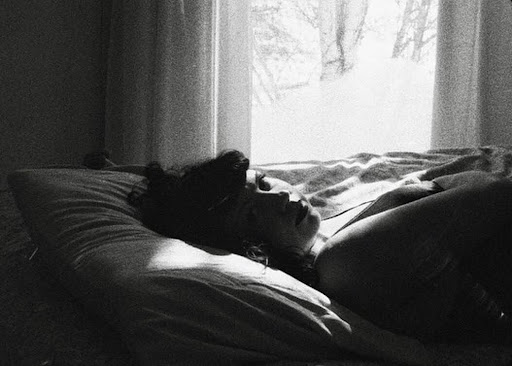
A black and white photograph shows a person laying in a bed by a window. Their face is turned toward us and light from the window shines on their face and pillow behind their head.

RestFest Film Festival is an artist-run virtual film and video art festival & online gathering space created by/for Disabled, Deaf, Chronically ill, Neurodivergent, and/or Mad community. The 2026 festival, happening February 1-28, features 27 film & video artworks and presents 18 virtual events all created/led by Disabled* artists. It is an international festival, with a community spanning 6 continents.The festival provides the opportunity to build connections with fellow Disabled* folks and films from all over the world without having to leave our beds. Not all of the festival films are about Disability or illness. RestFest Film Festival promotes free creative expression by Disabled* artists.The festival is not in service of educating the non-Disabled. It’s for each other.

We are honored to bring to streaming films which had never before been accessible from home. Video artwork “A Brief History of Circles” by Georgia Kumari Bradburn’s (co-director of the award winning feature film “The Stimming Pool”) is having its Online Premiere at the 2026 RestFest Film Festival. The film explores forms of Autistic experience in an innovative, embodied cinematic language. Moya Bailey (author of Misogynoir Transformed: Black Women’s Digital resistance) offers first time online screening of her award-winning short documentary, “You Just Watch & See”, an intimate portrait of her late cousin achieving her dreams. 

The festival operates from the perspective of access as community care, and an important part of community building. With this, the concept and reality of accessibility becomes expansive. It includes structural measures such as captioning (CC/OC) and audio description (AD) for all films. It means that comfort is encouraged, that attending from bed or even falling asleep during events or films are welcomed. Events have scheduled breaks, low-sensory Zoom breakout rooms available, and recordings afterwards for folks who were too low on spoons to attend; or for folks who did attend but would like more time to process. Scholarship tickets are available so no one is turned away. Films are available for streaming for an entire month, to be watched at our own paces. Importantly, attendees are invited to request additional access measures ahead of time or during. However, practicing access as community care fails if it exists solely in the dynamic of offerings from organizer to attendee.


The festival is a community initiative, shaped by the films programmed, the event facilitators, and the attendees. Every community member is co-crafter of this caring & accessible space. By prioritizing access in its many forms, including communicating that we are not experts, the stage is set for access intimacy to take shape. In coming together as Disabled* folks and celebrating one another’s work, there is a potent sense of ease, an exhale, a release. We feel that this comes from treating access as a loving act. Hearing visual descriptions, being invited to make yourself maximally comfortable, seeing that captioning and AD are available, guards come down and a sense of unity is formed. Caring for one another becomes a collective effort. As Mia Mingus writes in “Access Intimacy: The Missing Link”, access intimacy “is a freeing, light, loving feeling. It brings the people who are a part of it closer; it builds and deepens connection.”

We hope this introduction to RestFest invites your connection. RestFest 2026 runs until February 28th, and there is still time to connect with the films! If you start the films before the festival ends, there are an additional 28 days to watch. To find out when film/video art submissions open for the 2027 RestFest Film Festival, join us on Substack and Instagram. We would love to see your work! In addition to our annual festival, we offer year-round virtual programming, including monthly arts gatherings and special events. We are always open to event proposals from community members by email: restfestfilmfestival@gmail.com. Come and co-create this space with us!

Bec Miriam (they/them) is a Crip, Mad, AuDHD artist+ filmmaker, programmer, workshop facilitator, & founder/artist/organizer of RestFest Film Festival.Their work centers Crip community, access intimacy, & manifestations of Crip Time and Neurodivergence in time-based artwork & creative processes. Their work has shown in galleries, festivals, and publications, such as Museum of Moving Image (NYC), BFI Future Film Festival (London), Sunrise Film Festival (Suffolk), Feels (Canada), & Lassitude (UK). bec-miriam.com

About Rooted In Rights

Rooted in Rights exists to amplify the perspectives of the disability community. Blog posts and storyteller videos that we publish and content we re-share on social media do not necessarily reflect the opinions or values of Rooted in Rights nor indicate an endorsement of a program or service by Rooted in Rights. We respect and aim to reflect the diversity of opinions and experiences of the disability community. Rooted in Rights seeks to highlight discussions, not direct them. Learn more about Rooted In Rights.
Lewis Capaldi is Taking a Break. Why Can’t I?

Singer-songwriter-musician Lewis Capaldi, a white man in his 20s, wears a black jacket and pants and a white T-shirt as he stands in front of a microphone with an acoustic guitar wrapped around his neck, hanging across his chest. His eyes are closed and his lips are slightly parted as he sings into the mic.

On June 27th, 2023 Lewis Capaldi officially announced his hiatus from touring, citing “the impact of Tourette Syndrome” as part of his decision, one discussed in his award-winning documentary How I’m Feeling Now. He did not take this decision lightly, empathizing with fans about how disappointing it is to look forward to a tour that’s been postponed—and the costs associated with it.

There’s no doubt that Capaldi loves touring, his fans, and the ability to play music in front of thousands each night. As a fellow Touretter, I’m thrilled that there is both representation of Tourette’s and the need for rest from such an international star. But I most resonate with the final part of his Instagram statement, which apologizes for rest while simultaneously justifying it: “I’m so incredibly sorry to everyone who had planned to come to a show before the end of the year but I need to feel well to perform at the standard you all deserve.”

While I’ve hardly achieved the same elevated status as fellow Touretters like Capaldi, Billie Eilish, Howie Mandel, Steve Wallace, and others, I’ve achieved a lot in my life. I’ve been Key Club President, a foster for kittens, a published writer, musician, and so much more. This confuses people when I do desire rest.

There are days when I can indulge in spontaneous plans. On other days, I need to reschedule advanced ones. It’s all up to my body, which cannot be tamed on a whim. During times of stress it can flare up, waxing and waning as it pleases.

But you were fine yesterday; you’ve pushed through it before, I think, an echo of others’ sentiments when I cancel or postpone plans. It also shapes others’ decisions about whether or not to include me at all. Their explanation is usually, “I didn’t think you’d want to come” or “It would be too stressful for you.”

This leads to shame, guilt, and feeling excluded, just for being in an unruly body; requests to forgo my comfort and embrace pain for the sake of others’ needs are seen as the “right” thing to do. While there are many times wherein I believe in pushing through (if possible), like an important celebration or funeral, it can be stressful on the body if the brain decides it’s a “tic-ier” day. It often results in having to take muscle relaxers, sedatives, and pain relievers to get back to a manageable spot.

Yet I still feel the need to apologize.

Many with Tourette Syndrome are encouraged to push past these difficulties, which is why you don’t often see people disclose their Tourette’s. As a child, my neurologist focused on controlling and eliminating the tics he believed were temporary…and my fault. He blamed chocolate, video games, SpongeBob, anything but a disability. So the masking began—and worked—and continued throughout my childhood and teen years. I was an honor roll student, involved in many service clubs and honor societies. I hung out with friends, pushing through the discomfort for the most part and making up an elaborate excuse when I couldn’t.

I believed my tics were a personal failure…until my late diagnosis at 22, long after my tics “should” have left. I had to confront the fact that rest was not a privilege, yet the guilt of canceling or modifying plans remained.

Like many others in the world, doomscrolling TikTok is a favorite pastime. User Vermin and the Rats (with a green pixie cut I wish I could pull off) confronts me with truths: “Is it possible you tie your sense of self-worth to your productivity and your ability to help others, and that’s why you feel so guilty when you’re not able to be productive and you have to rest? That you’ve been masking your disabilities for so long, that you genuinely don’t know how to gauge what your needs are?”

It’s Just Nerves: Notes on a Disability by Kelly Davio is an essay collection chronicling the author’s experience as a disabled person in the 21st century. She writes, “If you are going to disclose your illness, our culture tells us, you had better do it in a way as to make other people feel gratitude for their own good health, to take advantage of their robust bodies….” My addition? If you disclose your illness, you better be a superhuman of sorts. A gold-winning athlete. A wildly successful musical artist. Even then, you’ll still need to apologize for the need to rest. After all, your exceptionalism is waning, which is unacceptable.

In many programs across the United States, services for disabled students are referred to as ”Exceptional Education.” If you happen to be “gifted” AND disabled, you’re labeled as “Twice Exceptional.” Disability, as mainstream culture understands it, cannot inherently be associated with anything good at all; it must be paired with something to “make” it okay. In this case, being exceptional is the only acceptable way to exist in a disabled body. Don’t believe me? Just look at inspiration porn, or the objectification of disabled people to make able-bodied people feel better about their own lives.

When people respond to me with “That’s okay” or “You’re still such a capable woman” after explaining how my Tourette’s works, I get frustrated. Of course it’s okay. I never said anything about my capabilities. I never apologized for my existence.

It’s hard to correct them outright. I’ve even had to correct myself when I’ve thought or said something similar to people with other disabilities. It’s hardwired into so many brains that disability cannot coincide with anything neutral or good, even if you’ve lived it. The only way out of it is to rest boldly. After all, one of the primary tenets of disability justice is rest. No maybes, buts, ifs, or sorries. Just rest.

To practice, I’ve been typing out and removing apologies from my requests to postpone or skip events. I often still leave them out of fear or guilt, but I’m slowly improving my self-advocacy, simply taking the rest I’m allowed to take. I can no longer feel the need to “make up” for the way I exist “proving” exceptionality.


Gretchen Gales (she/her) writes…a lot. After realizing becoming a veterinarian meant being good at math, she pursued writing and teaching as a career instead. You can find more of her written and artsy stuff at www.writinggales.com.

Rooted in Rights exists to amplify the perspectives of the disability community. Blog posts and storyteller videos that we publish and content we re-share on social media do not necessarily reflect the opinions or values of Rooted in Rights nor indicate an endorsement of a program or service by Rooted in Rights. We respect and aim to reflect the diversity of opinions and experiences of the disability community. Rooted in Rights seeks to highlight discussions, not direct them. Learn more about Rooted In Rights