
Pride in Community: No Queer Liberation Without COVID Mitigation

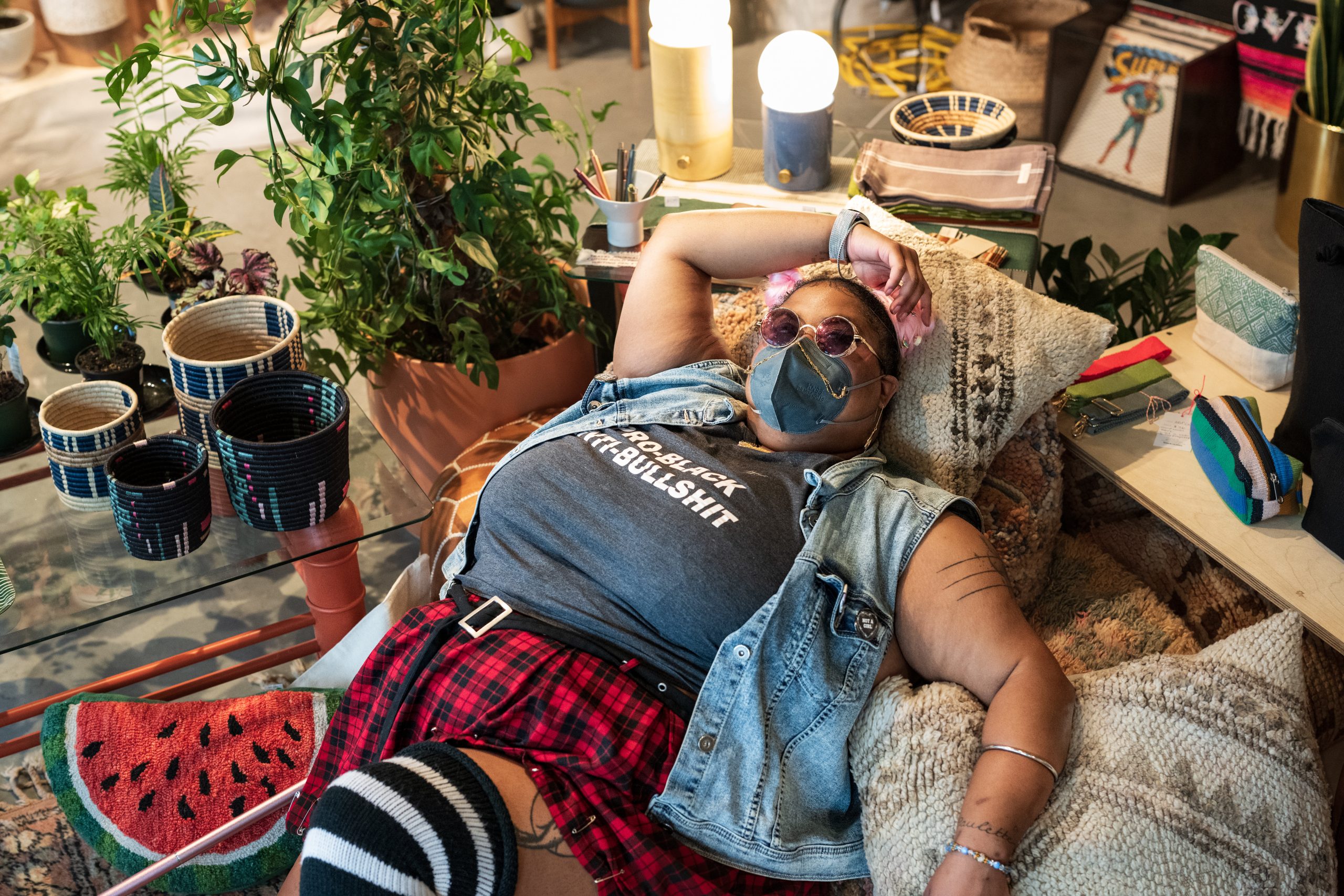
Top-down capture of a non-binary Black person lying back on top of various throw pillows, with one arm arched above their head. They wear tinted purple sunglasses, a KN-95 mask adorned by a double gold chain, and a “Pro-Black Anti-Bullshit” tank top paired with a denim vest and plaid skirt. A pink cane rests next to the person on a watermelon pillow.

Image Description: Top-down capture of a non-binary Black person lying back on top of various throw pillows, with one arm arched above their head. They wear tinted purple sunglasses, a KN-95 mask adorned by a double gold chain, and a “Pro-Black Anti-Bullshit” tank top paired with a denim vest and plaid skirt. A pink cane rests next to the person on a watermelon pillow. Photo by Disabled and Here

I’ve been watching online chatter explode as cautious concern mounts regarding hantavirus. Sound familiar? It’s the rodent-derived illness that took Gene Hackman’s wife in 2025 and recently wreaked havoc on a cruise ship. As someone who has been masking since 2020, it’s really mind-blowing: people are terrified of what has yet to affect us on any large scale while COVID, which has been affecting us substantially for over six years, rages on.

Politicians have failed us, institutions have failed us, and – while many people don’t like to hear it – individual people have failed us as well.

Nowhere have I felt this more than in queer and trans “community.” As a bi activist of almost 20 years, teaching across the country as a community educator, I have been intimately familiar with our people for a long time. I have learned from our ancestors and elders. I’ve taught my peers and younger generations. I’ve dealt with conflict. I’ve been betrayed. I’ve been uplifted. I know well the sacrifices that we’ve made – particularly those most vulnerable – for the movement.

So it puzzles and frustrates me every late spring, when Pride Month rolls around, and organization after organization, movement leader after movement leader promotes COVID-unsafe events and programming. I feel hurt, angry, and disappointed that people who are “supposed” to care and champion liberation for all consistently leave out some of the most vulnerable of our community. Do we, disabled people, not also deserve joy? Social camaraderie? To be seen? Do we, those most negatively affected by COVID, not also deserve to show our Pride? Not just in June (in the colonized U.S.), but year-round?

To be clear, this is an indictment. I’m very exhausted tiptoeing around the evidence-based fact that completely abandoning COVID precautions, leaving the most vulnerable to fend for ourselves, continues to kill and disable people – queer and trans people! – unchecked. But it’s an indictment swimming in love and care. If I didn’t care, I would stay silent. But I’ve been doing this work too long to stay silent.

So this calling in (and out) comes with a roadmap for doing better. Because we can do better – no, we must.

At its core, this is a systemic issue. However, that doesn’t mean that we are helpless. There was another time in our history where the government abandoned us and we, as individuals, stepped up our community care efforts. It can be done again.

One way is through advocacy. We must hold our government – federal, state, and local – accountable for how they continue to (mis)handle an ongoing pandemic. Whether you challenge local anti-mask laws or advocate for cleaner air, there is something for everyone to contribute.

Secondly, you can start requiring masks and testing at events again. Yes, really – no one can stop you! Mask blocs are a great collaborative resource, but there are also websites like Bona Fide (which I personally use), if you have the budget to purchase directly, to provide to those who have stopped masking.

Finally, you can organize more outdoor-only events during the warmer months and virtual events during the colder weather (and year-round!). Even outdoors, airborne transmission is still a risk, especially in large crowds. Plan ahead with social distancing and limiting the number of attendees.

Does this all feel a little daunting? I’m not surprised! Especially if you haven’t been thinking about who’s being left out, it can feel burdensome to try to navigate new protocols and accessibility needs. But we are all we’ve got and, ultimately, it is those of us who are cut off from community who are the most burdened.

This offering is by no means exhaustive, but by the time you’re able to read this, it’ll probably be too late for June 2026 events. However, Bi+ Visibility Month (September), LGBTQ+ History Month (October), Trans Day of Remembrance (November), and World AIDS Day (December), among others, are right around the corner. Plus, you have an entire year to get ready for Pride 2027.
Don’t delay; start planning now. And this time, those plans can include how to make your spaces safer for everyone and more inclusive of those most isolated so that all of us can have a “Happy Pride!”


Denarii Grace (she/they – mix it up!) is a multi-hyphenate writer and editor, singer, and long-time activist. Founder of Fat Acceptance Month, they’ve been an editor with Rooted in Rights since May 2022. She can be found on Facebook, Threads, and Instagram @writersdelite.

About Rooted In Rights

Rooted in Rights exists to amplify the perspectives of the disability community. Blog posts and storyteller videos that we publish and content we re-share on social media do not necessarily reflect the opinions or values of Rooted in Rights nor indicate an endorsement of a program or service by Rooted in Rights. We respect and aim to reflect the diversity of opinions and experiences of the disability community. Rooted in Rights seeks to highlight discussions, not direct them. Learn more about Rooted In Rights.

Monsters in the Closet: Facing Fears of Inaccessibility

Black and white illustration of a young child with long dark hair in a dress covering up their face as the mouth of a VERY large generic monster with sharp teeth tries to eat them.

The portrayal of disability in horror films is often very problematic—think of mental illnesses such as Dissociative Identity Disorder (DID) in the 2016 movie “Split.” Yet, horror movies hold a special allure to me. This could be because my mother has always been opposed to horror, gore, and movie violence in any form—except for distinct comedic effect. However, I think horror movies can hold a certain allure for disabled viewers due to their relatability. Being disabled can be incredibly anxiety-inducing. I find myself constantly in a state of what-if when dealing with aspects of my disability in an inaccessible world:

“What if TSA confiscates my medication? What if the environment there drives me to sensory overload and there’s no way to leave? What if I don’t “look” disabled enough to receive the accommodations I asked for?”

Horror movies often portray disabled people as the horror, but the true horror is the inaccessible world. I remember I hated tag, the default game of every elementary schooler, because I was always caught first. Years later, when watching horror movies I remembered the fear of being the farthest behind like the characters being picked off first by the monster.

In a haunted house horror, the family is tormented by fears and horrors while inside the house; outside of it, their anxiety over what lies inside tends to devour their lives. As long as the environment around us remains inaccessible, people with disabilities are constantly stuck inside the haunted house. Assuming that our home environments are accessible to us, that consolation can be our one reprieve. However, not everyone is that lucky.

Recently, one of my what-if scenarios happened. Since the beginning of the pandemic, I’ve done everything I can to prevent getting COVID-19. I have asthma and a history of lung disease. For many disabled people with similar concerns, the COVID-19 pandemic elicits a seemingly never-ending fear: what if I get COVID? Although vaccinations and new antiviral medications tampered these fears, the reality of a positive COVID test was still a shock.

By December of 2022, I’d made it through almost two full years of negative results. Each time my reactive airway and lungs flared up at an everyday cold, I’d take a test only to be negative. At this point, I did not expect to test positive, yet that second pink line appeared thick and clear. It was undeniable. Although I coughed and wheezed and my chest tightened, ultimately I didn’t need to be hospitalized. This was a feat I owe to vaccinations and modern medicine.

The real horror movie began after COVID, when suddenly my asthma was significantly worse. My pulse oximeter showed my oxygen levels dropping regularly to low 90s, a never-ending cough developed, and I was overtaken by a level of fatigue that I’d never experienced before.

Again, the horror for me was not my symptoms but the inaccessibility I encountered in everyday situations. The steep stairs to my apartment became the equivalent of a long, dark hallway from a suspenseful horror film. I started using a cane to combat the fatigue so that I could make it through my work day. My slow pace and inability to run created an even tighter time crunch, worsened by my ADHD. Everyday household tasks, such as laundry, became impossible as I no longer had the energy or strength to haul it to the laundromat without bending into a coughing fit or asthma attack.

Eventually, I was prescribed cough medicine and a new inhaler that managed to restore my asthma to a controlled state after a few more weeks. However, my asthma did not disappear and COVID-19 lingers.

A coping method I’ve been taught for anxiety  is to play out a worse-case scenario. This way you see that even the worst situation your anxiety can throw at you is not world-ending. One therapist explained it to me as “…seeing monsters in the closet makes them less scary. It’s the idea of the unknown that is the most terrifying.” I played out my COVID-19 scenario in real time and, despite the real struggles I faced dealing with the aftermath of the virus, I found ways to accommodate myself, even when facing inaccessibility.

Horror movies push monsters out of the closet. Most horror movies, especially the haunted-house subgenre, end in a tense resolution of the protagonists leaving the haunted area, often with the monster lingering in the background. In “The Shining,” the mother and son manage to get away unharmed, but Jack is left at the hotel, mad and murderous. The threat of fear lingers on, just as the threat of inaccessibility never fully dissipates.

People can develop a disability at any point in their life, even people who already label themselves disabled have fluctuating support needs. These are all themes that linger in the back of horror, often cloaked in offensive stereotypes. I often wonder what horror stories and movies written by disabled people could look like. How would we portray the everyday horrors of inaccessibility? Inspiration porn pities us and stereotypical horror films label us monsters.

However, we are just as human as any nondisabled characters, with flaws and triumphs that make us neither distinctly hero nor villain. Let’s take possession of the real monsters—the world’s accessibility barriers—and bring them out into the harsh daylight alongside the ghosts and demons on television.


Fifer Charlie Loftus (they/he), who goes by Charlie, is a queer disabled writer who lives in New York. He works in a library and enjoys reading, writing, and playing board games in his free time.

Rooted in Rights exists to amplify the perspectives of the disability community. Blog posts and storyteller videos that we publish and content we re-share on social media do not necessarily reflect the opinions or values of Rooted in Rights nor indicate an endorsement of a program or service by Rooted in Rights. We respect and aim to reflect the diversity of opinions and experiences of the disability community. Rooted in Rights seeks to highlight discussions, not direct them. Learn more about Rooted In Rights