
Pride in Community: No Queer Liberation Without COVID Mitigation

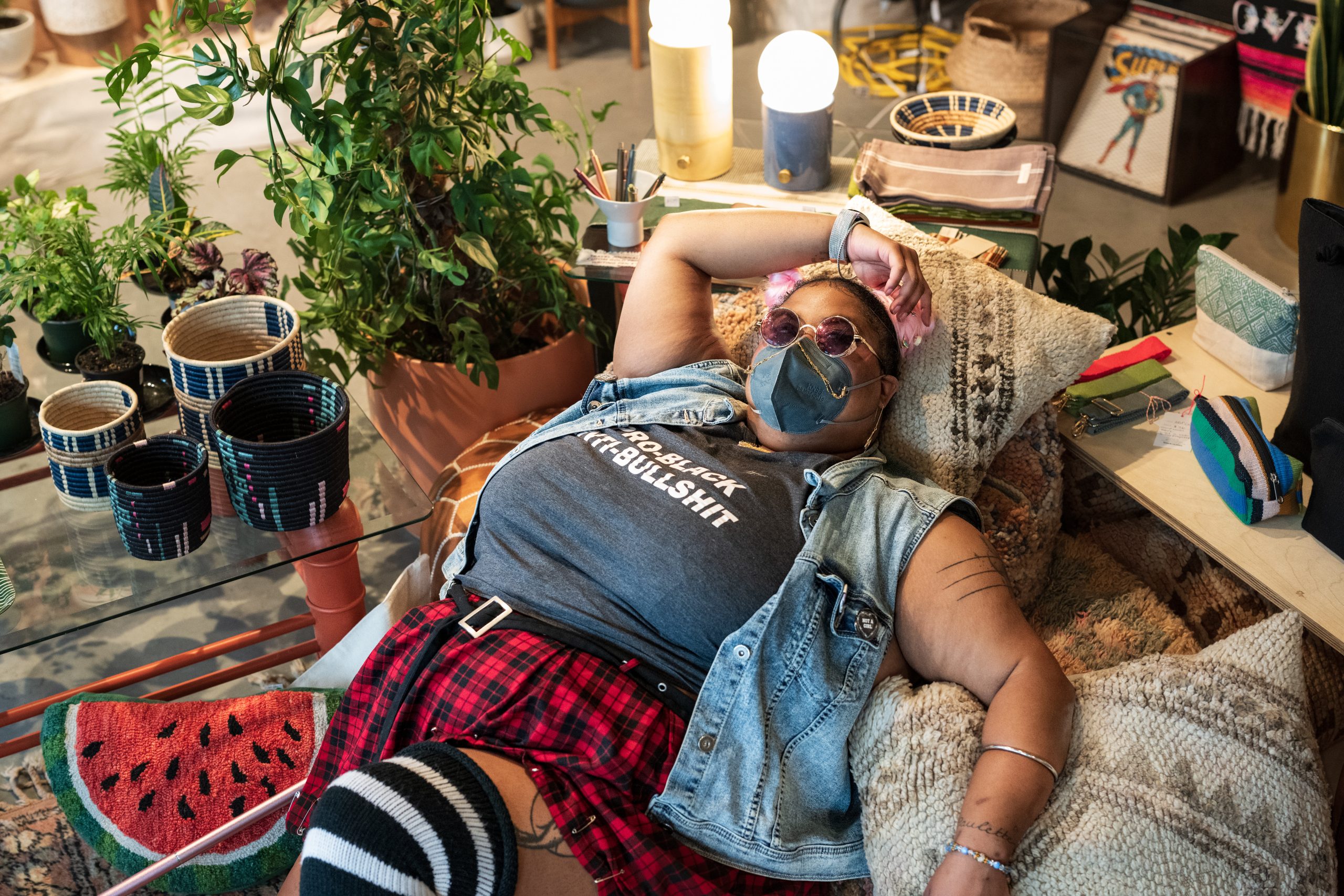
Top-down capture of a non-binary Black person lying back on top of various throw pillows, with one arm arched above their head. They wear tinted purple sunglasses, a KN-95 mask adorned by a double gold chain, and a “Pro-Black Anti-Bullshit” tank top paired with a denim vest and plaid skirt. A pink cane rests next to the person on a watermelon pillow.

Image Description: Top-down capture of a non-binary Black person lying back on top of various throw pillows, with one arm arched above their head. They wear tinted purple sunglasses, a KN-95 mask adorned by a double gold chain, and a “Pro-Black Anti-Bullshit” tank top paired with a denim vest and plaid skirt. A pink cane rests next to the person on a watermelon pillow. Photo by Disabled and Here

I’ve been watching online chatter explode as cautious concern mounts regarding hantavirus. Sound familiar? It’s the rodent-derived illness that took Gene Hackman’s wife in 2025 and recently wreaked havoc on a cruise ship. As someone who has been masking since 2020, it’s really mind-blowing: people are terrified of what has yet to affect us on any large scale while COVID, which has been affecting us substantially for over six years, rages on.

Politicians have failed us, institutions have failed us, and – while many people don’t like to hear it – individual people have failed us as well.

Nowhere have I felt this more than in queer and trans “community.” As a bi activist of almost 20 years, teaching across the country as a community educator, I have been intimately familiar with our people for a long time. I have learned from our ancestors and elders. I’ve taught my peers and younger generations. I’ve dealt with conflict. I’ve been betrayed. I’ve been uplifted. I know well the sacrifices that we’ve made – particularly those most vulnerable – for the movement.

So it puzzles and frustrates me every late spring, when Pride Month rolls around, and organization after organization, movement leader after movement leader promotes COVID-unsafe events and programming. I feel hurt, angry, and disappointed that people who are “supposed” to care and champion liberation for all consistently leave out some of the most vulnerable of our community. Do we, disabled people, not also deserve joy? Social camaraderie? To be seen? Do we, those most negatively affected by COVID, not also deserve to show our Pride? Not just in June (in the colonized U.S.), but year-round?

To be clear, this is an indictment. I’m very exhausted tiptoeing around the evidence-based fact that completely abandoning COVID precautions, leaving the most vulnerable to fend for ourselves, continues to kill and disable people – queer and trans people! – unchecked. But it’s an indictment swimming in love and care. If I didn’t care, I would stay silent. But I’ve been doing this work too long to stay silent.

So this calling in (and out) comes with a roadmap for doing better. Because we can do better – no, we must.

At its core, this is a systemic issue. However, that doesn’t mean that we are helpless. There was another time in our history where the government abandoned us and we, as individuals, stepped up our community care efforts. It can be done again.

One way is through advocacy. We must hold our government – federal, state, and local – accountable for how they continue to (mis)handle an ongoing pandemic. Whether you challenge local anti-mask laws or advocate for cleaner air, there is something for everyone to contribute.

Secondly, you can start requiring masks and testing at events again. Yes, really – no one can stop you! Mask blocs are a great collaborative resource, but there are also websites like Bona Fide (which I personally use), if you have the budget to purchase directly, to provide to those who have stopped masking.

Finally, you can organize more outdoor-only events during the warmer months and virtual events during the colder weather (and year-round!). Even outdoors, airborne transmission is still a risk, especially in large crowds. Plan ahead with social distancing and limiting the number of attendees.

Does this all feel a little daunting? I’m not surprised! Especially if you haven’t been thinking about who’s being left out, it can feel burdensome to try to navigate new protocols and accessibility needs. But we are all we’ve got and, ultimately, it is those of us who are cut off from community who are the most burdened.

This offering is by no means exhaustive, but by the time you’re able to read this, it’ll probably be too late for June 2026 events. However, Bi+ Visibility Month (September), LGBTQ+ History Month (October), Trans Day of Remembrance (November), and World AIDS Day (December), among others, are right around the corner. Plus, you have an entire year to get ready for Pride 2027.
Don’t delay; start planning now. And this time, those plans can include how to make your spaces safer for everyone and more inclusive of those most isolated so that all of us can have a “Happy Pride!”


Denarii Grace (she/they – mix it up!) is a multi-hyphenate writer and editor, singer, and long-time activist. Founder of Fat Acceptance Month, they’ve been an editor with Rooted in Rights since May 2022. She can be found on Facebook, Threads, and Instagram @writersdelite.

About Rooted In Rights

Rooted in Rights exists to amplify the perspectives of the disability community. Blog posts and storyteller videos that we publish and content we re-share on social media do not necessarily reflect the opinions or values of Rooted in Rights nor indicate an endorsement of a program or service by Rooted in Rights. We respect and aim to reflect the diversity of opinions and experiences of the disability community. Rooted in Rights seeks to highlight discussions, not direct them. Learn more about Rooted In Rights.

Black Disabled Rage and Denarii’s Grace

Gold mask shaped BAFTA award.

I didn’t want to write this while angry. I thought that maybe *I* shouldn’t write it. I didn’t want to say the wrong thing or publish a half-baked thesis out of haste.

But here we are. As Philip Seymour Hoffman once said, I am compelled.

Honestly it’s a rage that I didn’t know I had inside of me. It’s white hot and black cold all at once. Chaotic wandering *and* steely determination toward a destination. To be heard. To be seen. To be.

In the aftermath of the blatantly racist BAFTAs incident – involving white Tourette Syndrome (TS) advocate John Davidson and actors Michael B. Jordan and Delroy Lindo, two of the highly praised cast members of Ryan Coogler’s groundbreaking film “Sinners” – social media has been awash with a mix of confusion and questions, misinformation and disinformation, pain and anger.

But no one’s anger (and disappointment) has been more ignored, downplayed, and dismissed than that of Black disabled folks, particularly Black Touretters.

While I am Black and disabled, I do not have Tourette Syndrome (TS). I am not writing from a place of authority (on the subject or the incident itself), but a place of deep pain. 

In the first 24 hours of this troubling news, I watched Black people I respect spout some of the most harmful stereotypes about TS. I also watched complete strangers, all white, minimize the harm done and the pain and anguish of Black people – to protect a middle-aged white man. And their comfort.

Comfort.

Something that Black people, especially those of us who are multiply marginalized, seldom receive. It’s often been asked why white people are inundated with care and understanding when enacting harm while we not only rarely receive it, but are often flat out denied it.

Rushing to comfort Davidson reminds me of how white predators and abusers are treated compared to their racialized counterparts. Tarana Burke’s #MeToo movement took off near the end of the 2010s. When accusations were made public, racialized, especially Black, public figures were often more villainized, automatically believed deviant. It’s a frustrating reality, especially in a country where, so often, racialized, disabled, and other oppressed people are overly punished and even thrown into the system through no fault of our own.

What I want is a world that gives oppressed people grace. Grace does not gloss over the need for amends. It doesn’t demand continued connection or support. And it doesn’t snuff out righteous anger. John Davidson’s initial public “apology” was not only woefully inadequate, but insulting. White disabled people continue to be frustratingly disappointing. But every time I read the common sentiment “Oppressors should be treated like us,” from fellow marginalized people, I think: why would you not demand softness for yourself in this moment? Why would you want to change the world for the worse? My desire to uplift grace is ultimately not about Davidson and the BAFTAs or “cooning.” I am not Samuel L. Jackson in Django Unchained.

However, in creating the anti-carceral world I envision, I don’t want Black and other racialized predators to skirt accountability and reparation. Likewise, I don’t want white and other privileged predators automatically discarded when harm is done. Disposability politics are the antithesis of liberation. In part because, by definition, those of us who are most oppressed are the most harmed when they’re enacted.

When I imagination our future, I imagine creating a world that elevates our humanity. I do not go backwards. I do not devolve. I do not regress. I refuse to…because I know that a better world is possible. Heightened humanity can, with much practice, erode capitalism, topple fascist regimes, feed and house people, and save our oceans. When humans falter, as we often do, do we want to handle it differently? If not, then this essay isn’t for you. But, if so, we must destroy our current paradigms to rebuild healthier, more human ones.

Hope, as Miriame Kaba says, is a discipline. And hope manifested is only possible when we govern ourselves, right now, as if that world is already here.


Denarii Grace (she/they – mix it up!) is a multi-hyphenate writer and editor, singer, and long-time activist. Founder of Fat Acceptance Month, they’ve been an editor with Rooted in Rights since May 2022. She can be found on Facebook, Threads, and Instagram @writersdelite.

About Rooted In Rights

Rooted in Rights exists to amplify the perspectives of the disability community. Blog posts and storyteller videos that we publish and content we re-share on social media do not necessarily reflect the opinions or values of Rooted in Rights nor indicate an endorsement of a program or service by Rooted in Rights. We respect and aim to reflect the diversity of opinions and experiences of the disability community. Rooted in Rights seeks to highlight discussions, not direct them. Learn more about Rooted In Rights.

Living Disability Justice and Fat Liberation in Such a Time As This

A march of disabled activists in power chairs, scooters, wheelchairs, and walking holding signs. A sweatshirt reads "Fatties Against Fasicsm." Signs read, "No Body is Disposable," "Housing Injustice is Anti Blackness," "Housing Justice is Disability Justice." Disabled activist and ancestor Stacey Park Milbern is in the center of the photo.

I came to Health at Every Size (then body positivity, now fat liberation) in early 2013. I was in my first year of grad school – one of those rare creatures that lived on campus. I didn’t realize it initially, but listening to the body stories of my roommate – also a Black grad student – began to radicalize me. Diet and weight loss cultures sounded like nonsense. I didn’t have the language for it at the time, but I viscerally felt the harm they were causing – in her and in myself.

When I started Fat Acceptance Month (FAM) in January 2019, I envisioned it contributing to a larger paradigm shift. I wanted as many people as possible to benefit from the mental reset that had changed my life and politics. I wanted a better world and FAM was my way of reimagining its future.

Of course, the world was significantly different then, just seven years ago. Fat activism was different. Disability Rights and Justice activisms were different. And deservedly so.

But as the systems that choke us evolve, pivot, and expand (to excess), it has become increasingly clear: so must we.

Anyone paying attention has observed the rewinding of progress. Even former Vice President Kamala Harris, fairly center-left, declared that “we are not going back.” From trad wife content and DEI rollbacks to the apparent return (with a vengeance) of both heroin chic and the r-word, we are being reeled back in – to an environment more comfortable for the most powerful. Much of our modern world is steeped in centuries of colonization, imperialism, capitalism, and white cisheteropatriarchy. And, now more than ever, they don’t want us to forget it.

So how do we stand up and fight back? How do we practice the discipline of hope?

I believe that the linchpin of liberation movements is body autonomy. You can’t have abortion and reproductive rights, trans rights, intersex rights, workers’ rights – and indeed disability justice and fat liberation, among others – without an inherent human right to the very vessels that allow us to experience life. We resist the rise of authoritarian movements by centering autonomy (which is separate from individualism).

However, in my almost 20 years of experience as an activist (community educator), I find most movement work lacking in its understanding of both disability rights/justice and fat liberation.

Renowned poet, singer, musician, and author Gil Scott-Heron famously said, “The revolution will not be televised.” Most people interpret his declaration to mean that The Powers That Be won’t allow it to be properly documented. That has certainly proven to be true in all the awful ways. However, he stated that his meaning was actually about the fact that revolution begins in the mind, with an idea. When your mind changes, your values and politics change, your words change, your actions change. And, in time, the world too changes.

So I call on you to make a change (or, perhaps, build on your progress). This is about more than planning events that require masking (which you should be doing!) or advocating for larger seats on planes (which you should also be doing!).

If you’re reading this, you’re already off to a good start. But changing your mind almost always means challenging your assumptions – the ideas you already have, absorbed from a society that hates both disabled people and fat people. It requires digging deep. What beliefs do you continue to hold on to? Perhaps you think that, in an ongoing pandemic, the most vulnerable just have to fend for ourselves. Or maybe you believe that it’s still inherently good for larger-bodied people to intentionally lose weight.

Following the right activists and influencers, reading the right books, watching the right documentaries, joining the right groups won’t allow our movements to evolve, pivot, and expand if we’re not actually internalizing the new, challenging information we’re introduced to. It requires radical honesty: about our fears, our prejudices, our privilege (where applicable), our self-hate (where applicable), our ignorance. This is the work. It is hard, painful, but it is the only way that we all truly get free.

I cannot attest to the changing of the world just yet, but this is my testimony. One day, near the end of 2012, I had an idea. That idea led me to a Facebook group. That group introduced more ideas. My values and politics began to change. How I spoke, how and what I taught shifted. 90s R&B girl group En Vogue said it best: “Free your mind and the rest will follow.”

Denarii Grace (she/they – mix it up!) is a multi-hyphenate writer and editor, singer, and long-time activist. Founder of Fat Acceptance Month, they’ve been an editor with Rooted in Rights since May 2022. She can be found on Facebook, Threads, and Instagram @writersdelite.

About Rooted In Rights

Rooted in Rights exists to amplify the perspectives of the disability community. Blog posts and storyteller videos that we publish and content we re-share on social media do not necessarily reflect the opinions or values of Rooted in Rights nor indicate an endorsement of a program or service by Rooted in Rights. We respect and aim to reflect the diversity of opinions and experiences of the disability community. Rooted in Rights seeks to highlight discussions, not direct them. Learn more about Rooted In Rights.
Turning the Page: Meet Rooted in Rights’ New Editor-in-Chief, Denarii Grace!

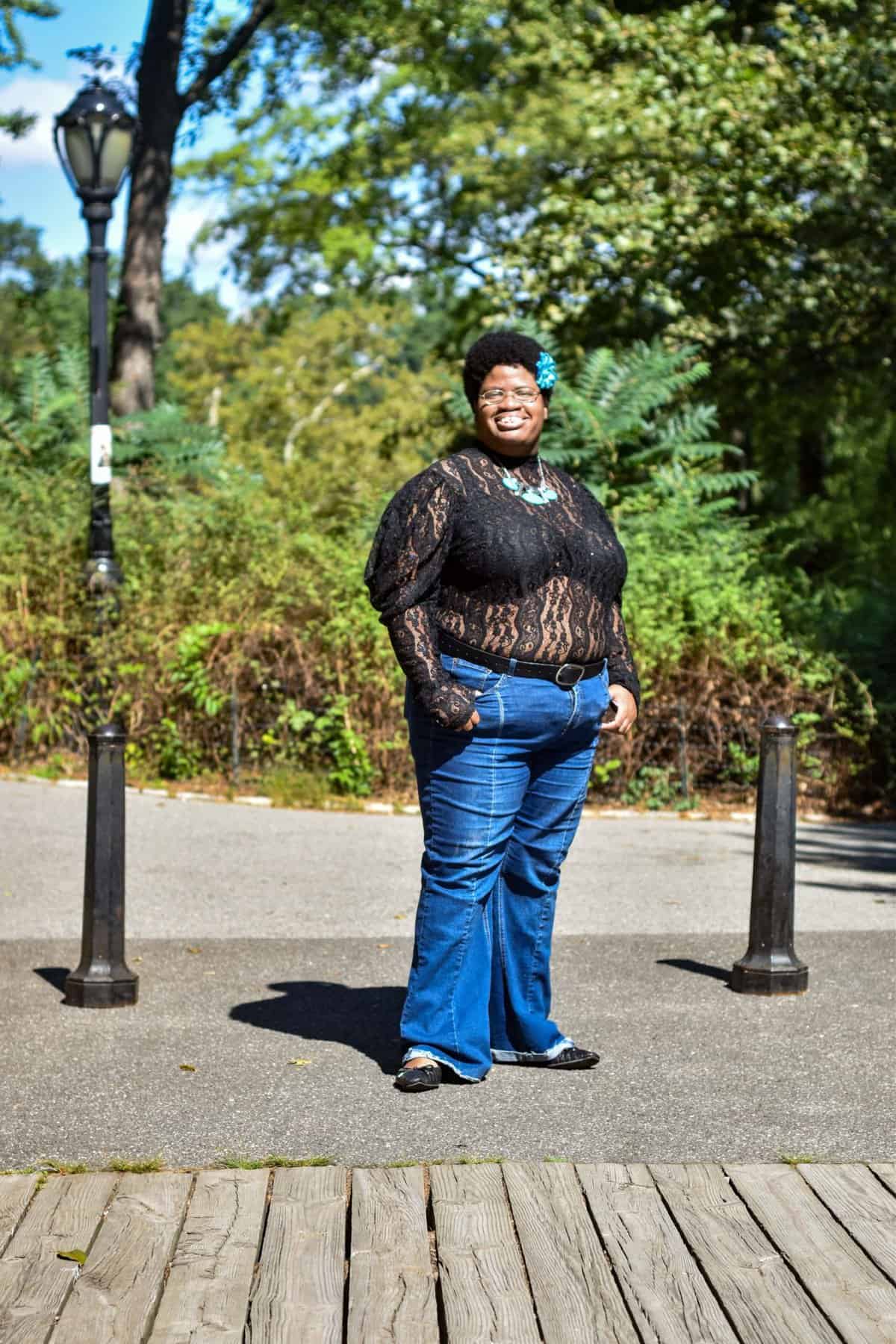
Denarii Grace stands outdoors on a sunny day, smiling at the camera in jeans and a black lace top, surrounded by trees..

CONTENT NOTE: brief mention of domestic abuse (no details)

I began with singing. Then I swam in songwriting. By the time I graduated from elementary school, I was riding the waves of poetry and playwriting. I would be in grad school before I dove into screenwriting in earnest, but I’d loved film since high school. And I always knew that I’d write a book one day. (Working on it!)

For as long as I can remember, I’ve always been a storyteller. The truth of who I am—and my attempts at running from that truth—has led me down a winding path that finds me here, with you. Like most children, I discovered storytelling as a means of stretching my imagination, nurturing my creative muscles. As life became too real, through a series of profound traumas, storytelling became a protective covering, a way of escape. It—specifically Buffy the Vampire Slayer, my favorite show of all time—literally saved my life.

There are many parts of my journey that I wish were different, but I am proud of where it has brought me. It allows me the privilege to serve my community in my new capacity as Editor-in-Chief of this very blog, Rooted in Rights.

I applied for this job in what has probably been the most tumultuous period ever in my personal life, as I deal with the traumatic aftermath of a domestic abuse experience. I didn’t know what to expect, particularly in a saturated industry—and in a job market rife with trouble, both good and bad. But even as I struggled (and continue to), I just knew that I had to keep going…somehow.

I reflected, very recently, on what has kept me going through the years. What has kept the fire burning as an artist, as a community educator, as someone who fights—in my own ways—for total liberation? How have I not given up: on my creative pursuits, on my career, on my communities, on freedom? My ancestors, certainly. And the friendships, family of origin and chosen, and networks I’ve built along the way. That keeps me alive, like Buffy, literally.

But what keeps me in the fight? A knowing, deep within me, that this is the work I’m meant to do. I am in this place, in this time for a reason. I am needed, as we all are. And being in community with other multiply marginalized people, other activists, culture creators, and truth tellers is a wonderful reminder that I am not alone. We are in this together.

It is in that spirit that I envision my time here at Rooted in Rights.

I was a writer first. I’m still a writer; that experience is a significant part of how I approach editing. What would I want if I were on the other side of this screen? Before I think about pitch structure, search engine optimization, and publishing schedules, I think about community. How do I want to behave in community? How do I want to be treated? How do I want others treated? Many people think that editing requires ruthlessness and callousness, but I reject those white supremacist, patriarchal ideals. It is possible to be firm and kind, commanding and understanding. It is possible to have standards and give grace (particularly if we want to avoid perpetuating ableism). That is the world I want to live in, so that is how I approach all of my work.

The community I hope to build at Rooted in Rights will not forget our history. It will honor our elders and dead, it will remember their stories. But it will not wallow in the past. It will learn from its mistakes and, firmly planted in the present, march—limping, stimming, and rolling—toward a just future.

My descriptivist orientation is rooted in pro-Blackness, anti-ableism, anti-colonialism, and working class politics. In the simplest terms, descriptivism is an approach to language that observes how language is actually used, as opposed to how language should be used (prescriptivism). I believe in writing to communicate and telling our stories the way they need to be told. I have standards: I use punctuation a certain way, certain phrasings are less optimal than others for clarity, emoting, and story structure, and derogatory slurs are, of course, a no-go. However, I also believe in abandoning those standards when warranted. Rules are meant to be broken, after all.

As a result, Rooted in Rights will continue its tradition of an absence of in-house writing standards. Come as you are, as they say. If there is basic structural cohesion (which I can help foster!) and we understand what you’re trying to say, that’s what matters most. Because when we nitpick over the rules, we just might be leaving out the most vulnerable and least heard.

Lastly, in general I am looking for stories—reflecting past, present, and future—that go, as the explorers in Star Trek like to exclaim, “where no one has gone before.” What topics never (or almost never) get visitation? Which angles of common stories do you yearn for someone to notice? Who among us is regularly getting left behind? What message do you believe our community (or our accomplices) needs to heed? What morsel of hope do you wish for us to hold on to? Where should we direct our righteous anger? Where do you believe we should go, and how do we get there?

And think about how you want your story told. Most of what we publish is in the form of personal essays that enlighten, agitate, and encourage. But the blog is also interested in reported and investigative pitches, short fiction, creative nonfiction, and interviews!

In addition, June is Pride Month, Caribbean Heritage Month, and African-American Music Appreciation Month, among others! There is absolutely time to publish those stories before June ends. We only publish a few stories per month, but that shouldn’t deter you from sharing your wisdom, knowledge, and calls-to-action with us. Many topics are evergreen and can be published at any time of year.

My hope is that Rooted in Rights continues to grow into one of the premier media organizations for Deaf/Hard of Hearing, Blind/Low Vision, disabled, chronically ill, and Autistic communities. (I will usually shorten that to just “disabled,” I promise.) “One of” because I also reject the bludgeoning capitalist hammer of scarcity: there is room for us all.

Not literally, of course. I can’t approve every pitch that makes its way to my inbox, for a variety of reasons. But, if you are disabled, I welcome you to share what you think is important! Introduce yourself (including your pronouns if you care to share). Your pitch should lay out, as best as you can in no more than two or three paragraphs, the five W’s and H: who, what, when, where, why, and, when applicable, how.

I want to be able to imagine the final piece without a first draft. I want to be able to feel the anger if you’re talking about a personal trauma or a grave systemic injustice. I want to be able to smell the ocean near your home or taste your grandma’s Hoppin’ John or your uncle’s homemade sofrito. You get the idea. And if you hit send only to realize you didn’t hit every mark? Don’t fret. Descriptivism, remember? If it’s good and we have the space for it, that’s what’s most important. You can pitch me here.

I consider it an immense privilege to take on this role. I am excited (and nervous!) to work with this team and all of you. My hope is that I do it the best justice possible, for you, for us. For community. Onward and upward!

In solidarity,

Denarii Grace (she/they – mix it up!)

Editor-in-Chief, Rooted in Rights

,

Rooted in Rights exists to amplify the perspectives of the disability community. Blog posts and storyteller videos that we publish and content we re-share on social media do not necessarily reflect the opinions or values of Rooted in Rights nor indicate an endorsement of a program or service by Rooted in Rights. We respect and aim to reflect the diversity of opinions and experiences of the disability community. Rooted in Rights seeks to highlight discussions, not direct them. Learn more about Rooted In Rights

Click here to pitch a blog post to Rooted in Rights.