
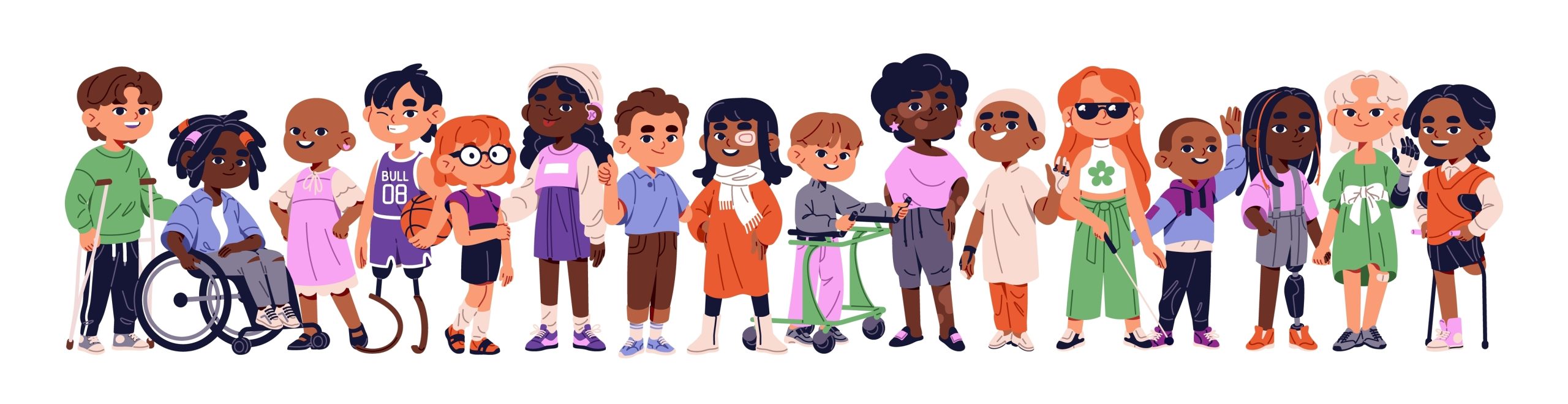
When Disabled Adults Care for Disabled Youth, Everyone Prospers
At my community’s youth-facing arts organization, there are no normal days. There are days when poetry prompts turn to discussions of love and worth, days when youth are too exhausted to do anything but curl up in a corner with a Switch, days when they swap hyperfixations instead of paint brushes. And there are days when I, and the other disabled adults running these programs, wake up the morning of a workshop with pain, fatigue, illness, mania, or any other in a long list of symptoms that sends the day’s plan out the window. But we cover for each other. We know what it’s like. And, importantly, we know that people’s well-being is more important than checking off items on a program agenda.
This attitude flies in the face of traditional youth work, where a canceled meeting or a “disengaged” participant is seen as a failure. But it’s better for the youth than a perfect schedule could ever be. They see us caring for each other. They hear us talking about our symptoms, about the challenges of the medical and psychiatric systems. They get advice on caring and advocating for themselves, identifying and addressing ableism, and dealing with symptoms from chronic pain to severe dissociation. When we talk openly about the day-to-day of disabled life, the youth see that there is a future for them – one that doesn’t involve succumbing to the messages they get about their worth, what’s normal, or what they are and aren’t capable of.
Perhaps more importantly, they get the grace and understanding they don’t from many able-bodied adults. No youth ever has to push themselves to do something they can’t, explain the reasons for a bad day, or mask a part of themselves society tells them to hide. The longer they’re a part of a community where this is normal, the more likely it is that disabled youth will open up about their identity and struggles, share their experiences with us and each other, and ask for what they need. And all youth get a glimpse of what it could look like to live in a world that doesn’t look upon disability as “other.”
It takes work, to be sure. We have to fight to stay in a nonprofit world that can dismiss the consequences of our disabilities as inconsistency or lack of professionalism. We have to show up with N95s to a room full of bare faces. We have to explain that our Discord server isn’t just a fun project for playing games but is an essential piece of building an accessible community. We have to choose to be open, honest, and caring in ways that don’t always feel easy. And we have to step in to support one another so this work can continue. But all of the extra effort we put into building a new kind of nonprofit culture is well worth the positive impact we have on young people—and each other.
Jaclyn Lewis (they/she) is a writer and youth worker using the power of collaborative storytelling in games like Dungeons & Dragons to create safe and inclusive creative environments for young people. They work with youth at OutFront, Fire Arts, Young Dragonslayers, and the Kalamazoo Public Library and wrote Rolling with the Youth, a guide to running inclusive, safe, and fun tabletop roleplaying games for all ages. She enjoys crafting words, gifts, and community, and can be found on the internet at @wranglerofchaos.
About Rooted In Rights
Rooted in Rights exists to amplify the perspectives of the disability community. Blog posts and storyteller videos that we publish and content we re-share on social media do not necessarily reflect the opinions or values of Rooted in Rights nor indicate an endorsement of a program or service by Rooted in Rights. We respect and aim to reflect the diversity of opinions and experiences of the disability community. Rooted in Rights seeks to highlight discussions, not direct them. Learn more about Rooted In Rights


So grateful for your work!
Hello.
I came across your website thru Northwest Center.
Can we be added as resource for your families that could use an extra help at home with adults with disabilities?
We are local women owned In-home care agency in WA state.
Web: evergreencaresolutions.com
Email: contact@evergreencaresolutions.com