
Dear Meryl Streep: We Don’t Want Pity, We Want Progress
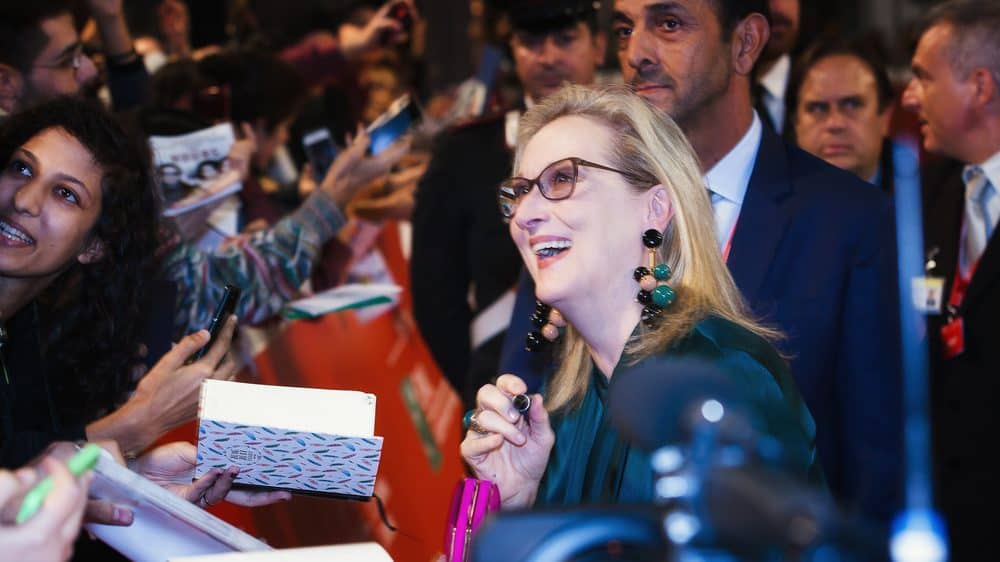
I didn’t watch the Golden Globes, but saw Meryl Streep’s speech the next day. As she blatantly called out the president-elect on his bullying of Serge Kovaleski, a disabled reporter, I wondered why that specific incident “sank its hooks in [her] heart,” specifically when I have otherwise not heard anything from Streep about disability justice. This mockery of Kovaleski affected many folks in a similar way; attacking a man with a disability was the last straw or the moment when their opinion toward the president-elect changed. As a society, why do we believe bullying a disabled person is more severe, more worthy of our moral objection, than other types of bullying?
Why do many ignore racist, sexist remarks, but suddenly pause when it comes to disability? And where are all these concerned citizens when, more than ever, we need support in our fight for disability rights?
It starts with how society views disabled people in general – as powerless, pitiable humans here to act as either inspiration or a target for hatred. We are either brave for daring to go out in public, or scorned for receiving the government support we need to live. And often, we are infantilized. As a woman in my thirties, I must still assert my adulthood to well-meaning individuals who think I still use a kid’s cup in restaurants.
Besides a few fringe elements, our society looks down upon those who bully children, and rightfully so – we should denounce all bullying. Then it follows, as we infantilize disabled people, we also view our bullies as taking it too far. People view us as defenseless, of needing more protection, much like children.
But disabled people have been fighting all along, lending our voices, our words, and our existence toward advocacy and justice. We live and fight against the tide of ableism, whether we want to or not, because this is our reality.
Pity is a dangerous weapon, even if there are positive intentions behind it – it strips us of our dignity and personhood. Pity prevents folks from seeing me as capable of finding love, having friends, working, or living in the community; this view of disabled people directly affects government policy and the services we receive (or could receive) to live our best lives.
So when Meryl Streep talked about the reporter, a speech now seen by millions, I wonder if it will mobilize abled people to fight alongside us and learn more about the disability-rights movement, or if it just further perpetuates a damaging stereotype of disabled people. We’ve been here, listening to comments similar to those made by the president-elect all the time; while it may be a new heartbreak for Streep, Trump’s comments are our rallying call.
About Rooted In Rights
Rooted in Rights exists to amplify the perspectives of the disability community. Blog posts and storyteller videos that we publish and content we re-share on social media do not necessarily reflect the opinions or values of Rooted in Rights nor indicate an endorsement of a program or service by Rooted in Rights. We respect and aim to reflect the diversity of opinions and experiences of the disability community. Rooted in Rights seeks to highlight discussions, not direct them. Learn more about Rooted In Rights



Hello Erin Hawley,
Thank you for your post! I very much agree with you. I have been moved by such actions – actions I deem to be performative social justice – and am glad to see that you picked up on this as well. Outrageous acts of social injustice draw the attention that is tapped into by news outlets and reporters; they draw the same energy in readers as the shock experienced by the observer of a car wreck. People bemoan its existence while peeking through their fingers to take in the gruesome details.
This speech by Streep taps into that. People (and the media) will gawk at the obscene and dramatic acts of the president-elect mocking a reporter with disabilities because that is an outrightly objectionable act. The same people will act insulted and affronted at a person with a disability rebuffing their ‘God still loves you’ comments when approached out of nowhere by someone they do not know, as if that statement needs any explanation as to why someone may find that offensive.
What I mean to say through all this is that it’s easier to condemn malevolent and extreme acts, all while acting in the same way that follows this line of thinking in a less obvious way.
As a disclaimer, I do not have any quarrel with Meryl; in fact, I consider her to be quite accomplished and skilled at her craft. Moreover, I agree with her that this mockery of the reporter with disabilities was tasteless, inappropriate, and offensive. I do not take issue with the comments she made or the scenario she commented on. I won’t guess why this resonated with her or question the quality of her character. I do not think she meant harm. I just wish that her opinion on disability rights issues extended passed this one instance.
Thank you for sharing an important perspective.
Keep on keeping on!