

How My Cancer Diagnosis Has Led Me to Redefine Disability
After decades of looking at Multiple Sclerosis as a disability rather than a disease, my experiences are forcing me to reexamine my perspective on illness and to redefine disability.
I, like many people with disabilities of my generation, rejected the medical model of disability, which focuses on disability as a diagnosis. My life has been so much more than my illness, my vision loss, and my mobility issues. I am a parent, a spouse, a volunteer, and an employee. I have spent my personal and professional life advocating for the laws and technology needed to create a more inclusive world. But now, after a cancer diagnosis, I am also a patient.
Being a patient has pushed me to reflect on my own ableism and the internal hierarchy of disability that I accepted.
At some level, whether I directly acknowledged it or not, I created a caste system of “high functioning people” who “gave back” through work, community engagement, and demonstrating self-determination. But it was never a matter of making money or being a financial success, of titles or awards. My benchmarks of success were coordinating support services or personal care attendants, negotiating reasonable accommodations, mentoring, and advocating. I defined myself as an advocate who was helping more than as a person receiving help — internalized ableism, front and center.
Having cancer has led me to reevaluate how I perceive myself and others. While I’d like to think that my perspective on disability was already evolved years ago, I believe I initially rejected the medical model not because I was forward thinking, but rather out of a desire for self preservation. But what now that I must deal with the medical industrial complex and the medical model as well as the impact of my diseases? Dealing with medications and side effects and medical facilities is devastating to the psyche. How can I survive with my psyche intact, if not my body? The answer is simple and yet, not. I need to rely on others.
I do not believe I am of less value because I can’t advocate for myself as effectively as I have in the past; someday, I hope to feel that way, too. The truth is, while I am certainly not blessed by cancer, I am very fortunate to be surrounded, near and far, by good friends who are also excellent advocates. I have a community that fought for healthcare for all.
Now, I hope the disability community can become more inclusive by being aware of our own internal biases.While we are so much more than two-dimensional poster children, we do need to look internally at how we welcome those who are living and dying with illness, those who may also be patients. After all, the sustaining power of our movement is inclusion. It is recognition, respect, and even love for the whole person.
I know it will take time to overcome my own internalized ableism; I must hold myself accountable as part of the disability community. For until we can apply the same standards and acceptance to ourselves, we cannot be truly inclusive of others. I hope I have the time to get to that point. I know it will take patience.
About Rooted In Rights
Rooted in Rights exists to amplify the perspectives of the disability community. Blog posts and storyteller videos that we publish and content we re-share on social media do not necessarily reflect the opinions or values of Rooted in Rights nor indicate an endorsement of a program or service by Rooted in Rights. We respect and aim to reflect the diversity of opinions and experiences of the disability community. Rooted in Rights seeks to highlight discussions, not direct them. Learn more about Rooted In Rights


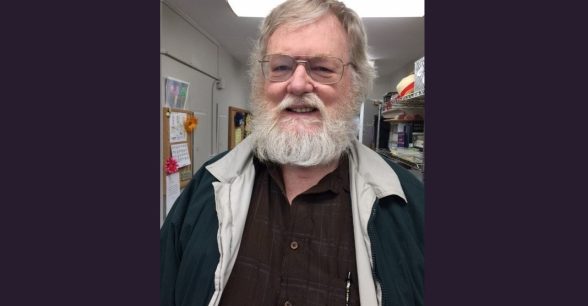
I recall that in the 1980’s and 90’s, when the disability legal advocacy movement was forming and defining its strategies, we tended to stay away from health policy and advocacy to avoid the common stereotype that disabled people were perpetual patients and that all we would care about is getting cured. Now that the disability advocacy movement is more mature, we can choose to not be so affected by what other people think of us. Susan is right, though, we also have an obligation to be thoughtful and recognize when we are acting on ableist values and assumptions.
Hi Susan Mazrui,
Great job on your post! It really resonates with me because it draws attention to such an overlooked fact. It asks to consider what it means to have a disability identity, acknowledging that this is only one of the identities a person may have.
This calls to mind the importance of intersectionality; intersectionality reveals the deeply faceted nature of identities and the multiple axis points of marginalization. In keeping with your admission of internalized ableism, I too admit to the same. Though it may be surprising to some that people with disabilities can be ableist, this is not altogether unexpected.
Considering how prevalent ableism is in society and how it is often normalized, it is nearly impossible to refrain from internalizing ideas and judgements that serve to invalidate your existence. Perverted notions about normalcy, deviance, and ableist narratives abound,
It is worthy of mentioning those with disabilities that receive their disability from trauma, as I did. Although such trauma was acquired through brain surgery and tumor resection, it left me in the confusing position of 14 years of nondisabled experiences that were constantly in conflict with my newly disabled reality. Having prior nondisabled experience meant that I had internalized implicitly ableist rhetoric for over a decade.
There was a long period of time where I fought against all manner of internal trauma that was the result of internalized ableism attempting to force me into a mold that I no longer fit. In the 11 years following my disability, I am happy to report that I feel like I have learned to view my identity with acceptance, something that was only possible after relinquishing my white-knuckled grip to ableist ideals casting me as inferior.
The endeavor of completely abandoning these stereotypes is likely one that I will always have to contend with, as this is the consequence of living in a society that wasn’t built with disability in mind. These are topics that need to be discussed more – thank you for joining me (or rather, I am joining you) in this fight for awareness and equity.
Keep on keeping on!