
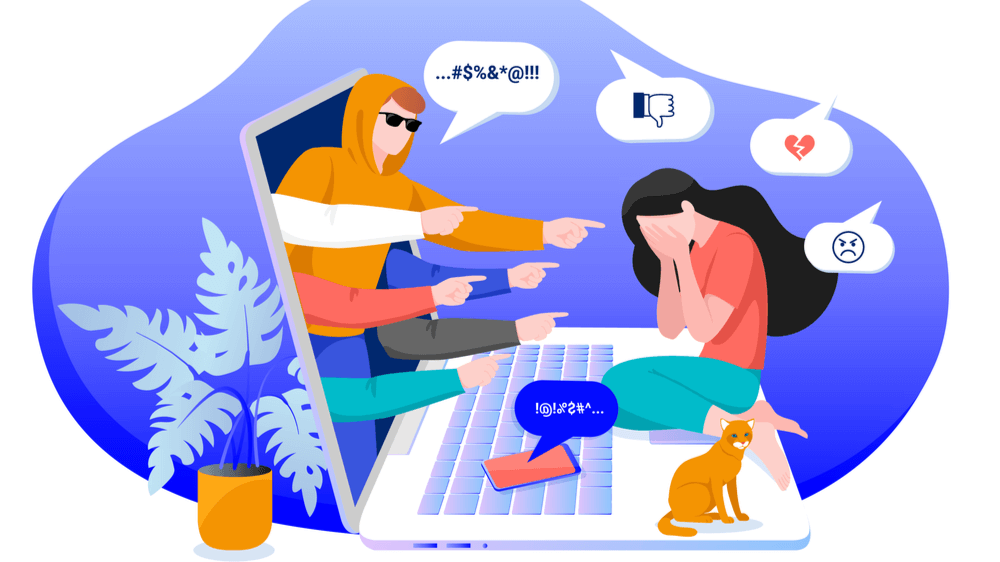
It’s Never Okay to Accuse Disabled People of “Faking”
For nearly 2 years I have watched a hateful group of cyber bullies grow in the dusty corners of the internet, a forum of people attacking and degrading those who were just reaching for support in the midst of living with a disability. The group’s main purpose? To find and expose people who they believe are “faking” their disability on the internet.
You don’t need to do anything particularly wrong to be accosted by this group. You just need to exist.
Their accusations are made with scant evidence. With little crux to their crusade, they are compelled to find the “proof” they need to justify their actions. They dissect social media feeds, pulling from posts written decades ago. They pressure people to share health information in an attempt to “prove” their story and thus get removed from their “blacklist” of “fakers,” but it’s never enough.
They publicly belittle people with disabilities who are active on social media. They destroy their reputation or attack endlessly until the subject is forced to walk away from the internet altogether. Then they move on to their next victim.
I became their next victim.
For disabled people, it can often take years of effort and persistence to fight society’s ableism and grow any sort of audience on platforms like Twitter and Instagram. We frequently share personal, sometimes deeply emotional, aspects of our lives to bridge the gap between disabled and non-disabled communities.
The thing is, just because you share your story in a public venue does not mean people are somehow privileged to extensive information about your health. In fact, for the sake of safety and mental health, most people who run larger disability social media accounts post very little about their health, though there are a few out there who frequently share updates. Those accusing people of “faking” claim these health updates “don’t make sense.”
I never expected to be accused of being a “faker,” and it happened so suddenly I felt as if I didn’t even have time to brace myself. I deleted accounts and changed some passwords. I made a rule for myself never to go and read what the cyber bullies said about me and told my friends not to share details with me. I tried to protect myself, but these measures were like paper walls against a hurricane.
Even though I avoided engaging, a lot of what was said came back to me eventually, in the form of various hateful comments and messages. People found ways around my security measures with throwaway accounts and direct message requests.. I woke up to comments telling me I was disgusting and demanding I delete my account. They attacked my weight, hobbies, writing, and anything else within reach.
Besides being appalled that a group of people focused on accusing others of faking their disabilities exists in the first place, it’s a special kind of blow to realize that most of society doesn’t care about the harm it causes to be accused. It can lead to unnecessary anxiety for some. And when the burden of these claims of faking are too much, most disabled accounts are forced to simply disappear.
Some of the most amazing accounts I follow and friends I’ve made have had to walk away from the online community as a result of the cyber bullying. Nobody is standing up for us, for our voices and our stories. No one should be afraid to post health updates on social media. We shouldn’t have to hide our stories from the public. This is blatant ableism.
Disability is an aspect of our lives that impacts us every day, and social media gives us the chance to connect with others in similar situations. So why wouldn’t we talk about it? And why shouldn’t we have the freedom to choose what we do or don’t share? Not only do these actions connect us with others, but they also introduce us to accommodations and help that we might otherwise have never known about. They are a vital aspect of thriving with a disability or chronic health problem.
Ultimately, cyber bullies accusing people of faking their disabilities are the manifestation of society’s inability to understand disability. For most, the choice to leave social media after being attacked was the only thing to bring them peace, but I have the opposite problem. While it may be easier to stop posting, I know that would simply be giving these people what they’ve wanted all along, and I’m done with that.
So I will continue to post and be as active as my health allows. Why? Because I will not live in a world where people insist on disbelieving disabled people. I refuse to let anyone silence my story.
About Rooted In Rights
Rooted in Rights exists to amplify the perspectives of the disability community. Blog posts and storyteller videos that we publish and content we re-share on social media do not necessarily reflect the opinions or values of Rooted in Rights nor indicate an endorsement of a program or service by Rooted in Rights. We respect and aim to reflect the diversity of opinions and experiences of the disability community. Rooted in Rights seeks to highlight discussions, not direct them. Learn more about Rooted In Rights


I browse the r/forum that talks about you and other people.
I have mixed feelings about illness faking in general, and I believe there is an underlying mental illness behind most people who fake physical illness.
I do not like when people attack or engage the “subjects” of the forum (of which there are dozens). I don’t see how people feel it’s okay to cross that boundary and ask you for proofs or tell you that you are disgusting.
I think if people put themselves online, it’s fair that they may be discussed by others. But it’s never okay to attack or belittle those people, despite disagreeing with their diagnoses. There’s a line we need to respect where it’s not our business. In a few words, “look, but don’t touch” in regards to human curiosities on the internet.
I am sorry you’re being attacked by people in private messages and through insincere friend requests. We are not all like this. I do not really know your story, you’re usually a passing subject in a feed I scroll through and I don’t go down the rabbit hole too deep.
I think it’s important to hear your side of this, so thank you for sharing. I am, as ever, of mixed opinion on this whole matter of observing fakers on the internet.
The only person who’s ever accused me of faking is the one person I used to think was my best friend. I came to realize he was somehow jealous of me being disabled. It pisses him off so bad that he doesn’t have “free money” (according to him) coming in every month and that there are people “living off the government”. What a dumbass. Any help disabled people get is not enough to “live off of”, and I’d much rather be faking than actually be disabled because everything I love to do is no longer possible for me. Anyone who thinks I’d willingly give all of that up are the ones with mental problems. I’d never accuse ANYONE of faking disability because I understand disability.
I have lost my disability income benefits because of a social security disability income benefits hearing officer who made a decision to cease my benefits after I reported I was afraid for my safety at an examination for continuing disability review (CDR) and that I was not going to attend. I reported abuse to APS regarding abuse against a disabled dependant prior to the request to attend for the CDR and then received the letter for the mandatory examination immediately after. The SSA.gov website states that they will never prompt to take immediate action or threaten to stop your benefits and I went into the local office to speak to a woman working behind the window and she said that the statement made on the SSA.gov website was “Not True” .. the Whitehouse weblink from the ssa.gov website states that employees who make frauded decisions has endangered Americans. Is all of this in this comment described as ableism? Is ableism or accusing a disabled person of faking or freeloading social security a bias offense in an act of Discrimination on someone’s disability? Can I express it as discrimination against my disability in a lawsuit?