
Navigating Mobility Aid Misconceptions
When I first started using a cane, I was faced immediately with misconceptions about mobility aids. I knew from being out in public with friends who use wheelchairs that strangers aren’t shy about asking what someone’s disability is. I was surprised to find that, because I’m in my early twenties, people often assumed I was temporarily injured because of the cane. A store employee asked me if I broke my toe (even though I had no cast on), and someone at my graduate school asked me if I injured myself. Each time it happened, I’d briefly mumble something like “I have a disability” and quickly move on, not wanting to get into details about Ehlers-Danlos Syndrome with someone I’ve never met.
Before I got my cane, I’d already known people who could walk but also used wheelchairs, and whose mobility aids changed depending on the situation. But I’d still held a common belief and applied it to myself—that mobility aids are a “last resort.” I spent years navigating large city crowds and public transportation with difficulty because I was too afraid to use a cane. After one too many falls on public transportation, and days when I was trying to shuffle through big crowds in Boston while passersby shoved me out of the way and I’d lose my balance, I came to the decision that a cane was something I needed.
Using a mobility aid didn’t make me any different; all it meant was that I was using an aid that made it easier to get around. I didn’t have to have certain types of disabilities — a paralyzed leg, a missing limb, a broken toe — to benefit from one. Mobility aids are for whoever benefits from their use, whenever they benefit from it.
Most people seek health care in conjunction with their choice to use a mobility aid, whether it’s physical therapy to learn proper use of forearm crutches, or occupational therapy to help them develop wheelchair skills. Mobility aid use can fluctuate from day to day, or over the course of someone’s life, depending on their specific health conditions. There are occasions when I don’t use a cane, particularly around my own house and when I’m taking short walks out in open areas where there aren’t lots of people. After a long day, my cane can sometimes become a pain, especially if I need to use my arms to carry something—so I’ve got a cane that folds, and I can tuck it into my bag whenever I need to.
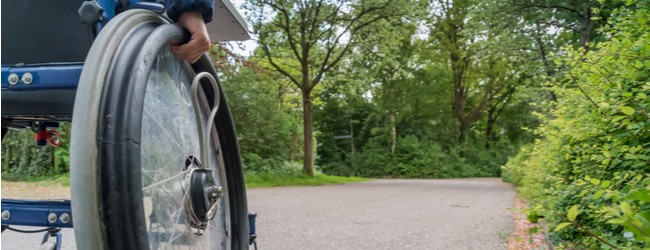
Disabled people are often judged if we’re seen with our mobility aids one day and without them the next, or if our bodies act in a way people don’t expect, like when someone sitting in a wheelchair stands up to readjust and someone else shouts, “It’s a miracle!” It’s not a miracle; many wheelchair users can walk. Some people use wheelchairs part-time or on an as needed basis, while others might only need a wheelchair when their symptoms are flaring up or if they’ll be out for an extended period of time.
I feel safest when the people in my life respect my needs and defer to me to make choices about what mobility aids work best in a given situation. There might be also be occasional reasons for someone we don’t know to ask about our mobility, like when I participated in my graduate school’s commencement ceremony and needed to discuss accessibility with the commencement director. The best thing to do is to ask when appropriate and not make assumptions.
Disabled people must be allowed to maintain our autonomy when it comes our mobility aids. We get to make decisions for ourselves about our limitations and comfort, and we get to choose what to use and when.
About Rooted In Rights
Rooted in Rights exists to amplify the perspectives of the disability community. Blog posts and storyteller videos that we publish and content we re-share on social media do not necessarily reflect the opinions or values of Rooted in Rights nor indicate an endorsement of a program or service by Rooted in Rights. We respect and aim to reflect the diversity of opinions and experiences of the disability community. Rooted in Rights seeks to highlight discussions, not direct them. Learn more about Rooted In Rights


Hi Alaina Leary,
I really enjoyed reading your post. As a person with disabilities that uses some type of mobility aid daily, I have had to contend with stereotypes and stigma. Because of my physical disabilities necessitating walker usage, I am not permitted to choose whether or not to self-disclose.
I frequently find myself in environments where I am the only person using a walker or the only young adult using one. Because the aging of bodies can require the assistance of a walker, I have often felt ageist ableism.
Using a wheelchair to avoid stigma around this brings infantilization and pathologization. As illustrated, every type and form of mobility aids is accompanied by social messaging. Included in this social messaging is the erroneous belief that each aid is to singularly be used by people with certain disabilities. The idea that someone may alternate between the uses of multiple does not receive adequate attention.
For example, even though I have physical disabilities that have resulted in mobility issues, the close proximity of furniture in my childhood house allowed me “furniture walk,” which means that I would use my arms to support myself using the furniture around me to get around.
I use a walker to get around the apartment that I share with my partner and I use it in the community in general. I opt to use a wheelchair for traversing long distances, such as stores and buildings.
The usage of mobility aids are not singular or static across all cases.
Keep on keeping on!