
Team

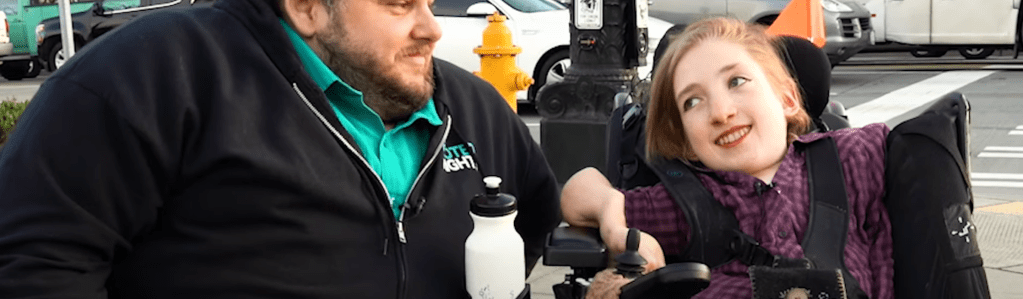
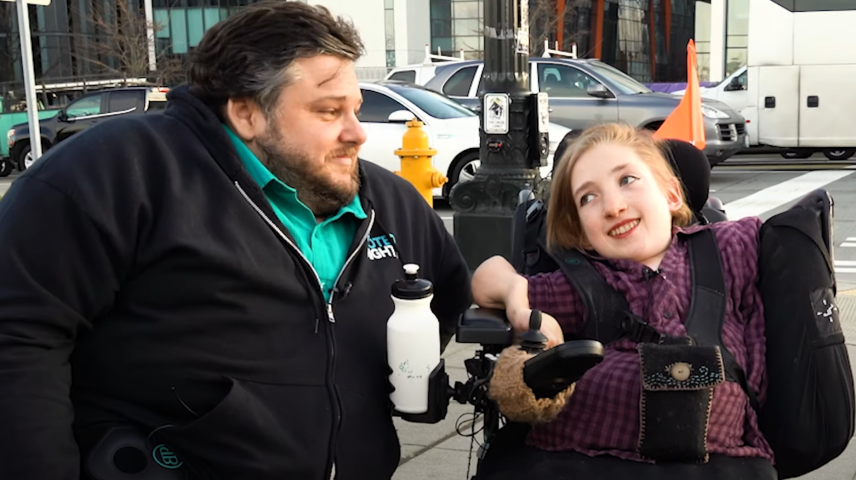
Allexa Laycock (she/they)
Director
Allexa Laycock (she/they) is the Director of Rooted in Rights, the media advocacy program of Disability Rights Washington. Allexa is a filmmaker and advocate with expertise in accessible media. Whether producing short-form content, storytelling workshops, or long-form documentaries, Allexa focuses on stories that challenge dominant narratives. As a disabled queer filmmaker, Allexa connects with their community in Washington State, nationally, and internationally to platform stories advocating for justice and self-determination.

Denarii Grace (she/they)
Editor, Rooted in Rights Blog
New York–based activist/artivist Denarii (rhymes with ‘canary’) Grace is a Black, bisexual, proudly fat, multiply disabled, poor, femme, witchy, non-binary/agender woman. She’s a blues singer-songwriter, poet, essayist, screenwriter, public speaker, community educator, and Editor-in-Chief of the Rooted in Rights blog, a publication by and for disabled people. Denarii is a former non-fiction editor at The Deaf Poets Society, an online journal featuring literature and art by D/deaf and disabled people. As a freelance writer, they have written for Bitch Magazine, Black Youth Project (BYP100), Brooklyn Magazine, Everyday Feminism, Black Girl Dangerous, and The Establishment, among several others. She founded Fat Acceptance Month in January 2019. As this bio demonstrates, Denarii Grace’s pronouns are she/they and they strongly prefer that people mix it up regularly, if one can remember to do so. You can find her on Facebook, Instagram, Twitter, and her website.
Angela Mogrovejo-Bosch (she/they)
Editor, Rooted in Rights Blog
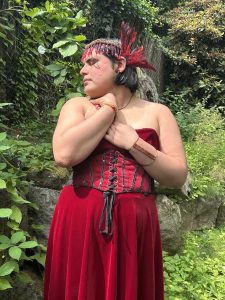
Angela Mogrovejo-Bosch (she/they) is a disabled, autistic, trans Latina who has combed the gamut when it comes to writing. Whether it be online blogs, tabletop game design, poetry, or zine writing, they have done it all. She once joined Rooted in Rights as part of their inaugural Disabled Writer Fellowship program and now returns as a Blog Editor. Despite having struggled with poverty and the risk of homelessness, she remains hopeful about the capacity for things to change. Having been motivated by on the ground activist movements and disability justice organizers, she sees writing as a tool for liberation. With writing, it is their hope that we can collectively imagine and create a better world for us all. She hopes to contribute to the kinder, interdependent vision of what makes disabled creative life so precious to cultivate. In these unprecedented times, they know disabled viewpoints are needed now more than ever.